


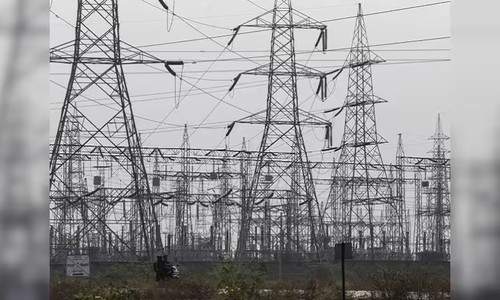
India and Singapore are working on a plan for a 2,000-megawatt (MW) cross-border power interconnection, a project that would sit within the wider ASEAN Power Grid initiative. If it goes ahead, it would tie the Indian grid to Southeast Asia through a transmission route running thousands of kilometres.
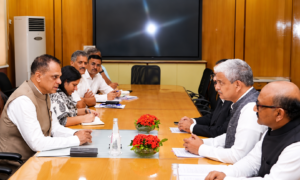
The details came from Shripad Yesso Naik, India’s Minister of State for Power and New and Renewable Energy, who represented the country at the 20th East Asia Summit Energy Ministers’ Meeting in Manila, Philippines.
The route under consideration
According to Naik, one option on the table is a land-based transmission corridor of roughly 3,000 km. It would connect Imphal in India to Singapore, passing through Myanmar, Thailand and Malaysia along the way.
It is worth stressing that this is one option under consideration, not a finalised design. The project is still at the planning stage, and the minister’s remarks did not include a construction timeline or a cost estimate.
Why the link matters?
Naik said the proposed interconnection has the potential to support reliable cross-border electricity trade, help integrate clean energy and strengthen regional energy security. For the countries along the corridor, a shared grid could make it easier to move power to where it is needed, rather than relying only on what each country generates domestically.
For Singapore, which is a small island market, access to a larger regional network is a logical fit. For India, the project would extend its transmission ambitions beyond its own borders and into Southeast Asia, which is where its foreign policy has been pointing for years.
India’s pitch at the Manila meeting
In his address, Naik stressed India’s commitment to regional energy cooperation, energy security and what he described as a secure, resilient, affordable and sustainable energy future.
He tied the proposal to India’s Act East Policy and its Comprehensive Strategic Partnership with ASEAN. According to a statement from the power ministry, he welcomed the ASEAN Plan of Action for Energy Cooperation 2026-2030. He also pushed for cooperation under the ASEAN India Plan of Action 2026-2030, covering the ASEAN Power Grid, regional power transmission, multilateral power trade, clean energy and energy security.
Sharing India’s experience
Naik said India is ready to share its experience with participating countries in several areas:
- Large-scale renewable energy deployment
- Grid integration
- Transmission planning
- Energy storage
- Green hydrogen and other clean energy technologies
He also called for stronger institutional links between the ASEAN Centre for Energy and Indian bodies. The institutions he named were NTPC Ltd, Power Grid Corporation, the Central Electricity Authority (CEA), the National Institute of Wind Energy (NIWE) and the National Institute of Solar Energy (NISE).
What to watch next?
Several questions remain open. The route has not been confirmed, and the minister gave no figures on cost or schedule. Cross-border grids also involve agreements between several governments on pricing, regulation and power trade, and those details will decide how quickly a project like this can move. For now, the announcement signals intent and direction rather than a firm commitment to build.
Frequently asked questions
What is the proposed capacity of the India-Singapore power link?
- The planned cross-border interconnection is 2,000 MW.
Which countries could the transmission corridor pass through?
- One option under consideration runs from Imphal in India to Singapore through Myanmar, Thailand and Malaysia.
How long would the corridor be?
- Approximately 3,000 km, according to the minister.
Who announced the plan?
- Shripad Yesso Naik, Minister of State for Power and New and Renewable Energy, at the 20th East Asia Summit Energy Ministers’ Meeting in Manila.
Is the route final?
- No. The land-based corridor is one option under consideration.