


South West Water says it cleared more than 5,500 avoidable sewer blockages in the past year, about 15 a day. Roughly three-quarters were caused by wet wipes and fats. The company is joining the UK-wide Unblocktober campaign to ask customers to change what they flush and pour away.
It is the kind of problem that rarely makes headlines until it reaches someone’s front garden. A wet wipe goes down the toilet, a pan of leftover fat goes down the sink, and weeks later a sewer somewhere is partly blocked. South West Water says that story played out more than 5,500 times across its region in the past year, and almost all of those cases could have been prevented.
That works out at more than 15 avoidable blockages every day. The company says around three-quarters of them came down to two things: wet wipes and fats.
What the company found?
The figures come from South West Water, which is part of Pennon Group and looks after more than 25,000 kilometres of sewer network across the South West. It released them in support of Unblocktober, a month-long UK campaign that encourages households and businesses to stop drain blockages and protect waterways by disposing of waste responsibly.
Wet wipes, sanitary products and fats, oils and grease (often shortened to FOG) were named as the main culprits. Wipes and fats alone accounted for most of the total.
Why wipes and fats are such a bad combination?
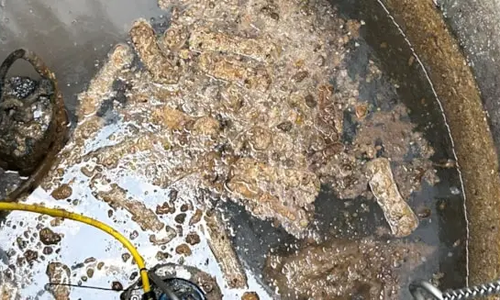
Toilet paper is designed to fall apart in water. Wet wipes are not. They hold together as they travel through the pipes, and when they meet fats, oils and grease, the two stick together and harden into a stubborn mass.
Left alone, these clumps can grow into the concrete-like deposits known as fatbergs. This is why a single habit, repeated across thousands of homes and kitchens, can add up to a serious problem underground.
What happens when a sewer blocks?
According to the company, the effects reach well beyond the pipe itself. Unchecked blockages can:
- flood homes, gardens and streets,
- create unpleasant smells,
- damage the sewer network,
- raise the risk of pollution reaching rivers and the sea,
- lead to costly repairs.
Jay Harris, South West Water’s Director of Wastewater Services, said many of the blockages his teams deal with are “entirely avoidable.” He added that wet wipes and FOG remain the biggest causes, building up over time and restricting flows in the network.
What the company is doing about it?
South West Water says it works to prevent blockages as well as clear them. Its approach has three parts:
- Monitoring technology to spot problem hotspots before they turn into blockages.
- Targeted sewer cleaning in the places that need it most.
- Work with food businesses to improve how they manage and dispose of fats, oils and grease.
The last point is tied to its Bin It, Don’t Block It campaign, which has supported more than 2,200 food businesses. Harris said the company is investing in new technology and working closely with businesses, but customers also have an important part to play.
What customers are being asked to do?
Many people flush wipes or pour leftover cooking fat down the sink without realising the effect, the company says. Through Bin It, Don’t Block It, it is asking households and businesses to do the following:
| Action | Why it helps |
|---|---|
| Flush only the three Ps: pee, poo and paper | Keeps materials that don’t break down out of the sewer |
| Let fats, oils and grease cool, then put them in a container or food waste bin | Stops fat from sticking to wipes and hardening in the pipes |
| Keep wipes, sanitary products and other unflushable items out of toilets | Removes the main material that fatbergs are built on |
| For food businesses: install and maintain grease management equipment and follow good kitchen practices | Cuts the largest single source of fat entering the network |
Harris summed it up by saying that by flushing only the three Ps and keeping FOG out of sinks and drains, people can help protect their communities, rivers and the environment.
The bigger picture
The numbers show how much of the sewer maintenance workload is self-inflicted. Blockages caused by what goes down the drain take crews away from other work, cost money to fix, and can end in flooding or pollution. Campaigns such as Unblocktober do not remove the problem on their own, but small changes in kitchens and bathrooms are the cheapest way to reduce it.
FAQ
How many avoidable sewer blockages did South West Water clear in the past year?
- More than 5,500, which is equivalent to more than 15 blockages every day.
What causes most of these blockages?
- Around three-quarters were caused by wet wipes and fats. Sanitary products and other unflushable items also contribute.
What are the three Ps?
- Pee, poo and paper. These are the only things South West Water wants customers to flush.
What is Unblocktober?
- A month-long UK campaign that encourages people and businesses to prevent drain blockages and protect waterways by disposing of waste responsibly.
How should I get rid of cooking fat?
- Let it cool, then put it in a container or food waste bin instead of pouring it down the sink or drain.
What is a fatberg?
- A hard, concrete-like mass formed when wet wipes and fats, oils and grease stick together in the sewer.