


Report Alleges Aperam’s Eucalyptus Plantations Dried Springs and Cut Groundwater in Brazil’s Jequitinhonha Valley
A new report by the Global Forest Coalition (GFC) alleges that large-scale eucalyptus plantations run by steelmaker Aperam in Brazil’s Jequitinhonha Valley have lowered the regional water table by 4.5 metres between 1974 and 2019, dried up springs and streams, and put traditional communities under severe social and economic strain.
The report, titled “Aperam BioEnergia’s Green Steel and Carbon Removal Illusion: Dry Streams in an Ocean of Eucalyptus,” was produced with local community groups, including the Centro de Agricultura Alternativa Vicente Nica (CAV). The claims below are the report’s findings and allegations, not conclusions from an independent or official investigation.
Key Takeaways
- The report says the regional water table fell 4.5 metres between 1974 and 2019, which it links to the year-round high water use of eucalyptus.
- A 2019 survey by the Turmalina City Council found that 89 per cent of water springs had dried up, according to the report.
- Native vegetation on the Chapada das Veredas plateau fell from 86.1 per cent in 1973 to 24.6 per cent by 2018.
- Aperam plans to expand its plantations by 20 per cent with support from the World Bank Group’s International Finance Corporation (IFC), under a €250 million financing agreement.
- The authors call the company’s “green steel” and biochar carbon credits a greenwashing strategy. This is their allegation.
- The authors demand a halt to plantation expansion, return of land to communities, restoration of the Cerrado and compensation for affected families.
Who Is Behind the Report, and What Does It Cover?
The Global Forest Coalition is an international advocacy group. Its report investigates the social, economic and environmental impact of Aperam BioEnergia, described as one of the world’s largest charcoal producers, in the Jequitinhonha Valley in Minas Gerais, Brazil.
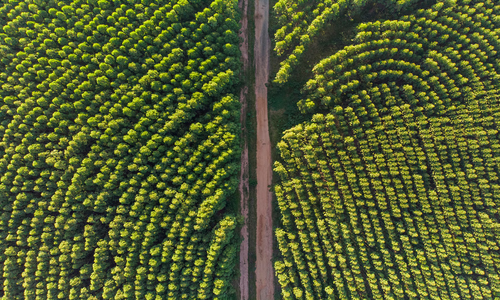
Aperam manages roughly 150,000 hectares of land. About two-thirds of it is covered by industrial eucalyptus monocultures. The wood is turned into charcoal in large kilns. The company produces more than 420,000 tonnes of charcoal a year from these plantations, which fuels Aperam South America’s steel mill in Timóteo. The company markets the result as “green steel” made with renewable forestry.
The Water Findings
The authors say eucalyptus plantations use water all year round, and that this caused the regional water table to fall by 4.5 metres between 1974 and 2019. They link the drop to drying springs and streams and to damage to traditional farming and local food security.
The report points to several other figures:
- Rainfall recharge: About 50 per cent of annual rainfall infiltrates the soil and refills groundwater under native Cerrado vegetation. Under eucalyptus monocultures, the figure is about 29 per cent.
- Springs: A 2019 survey by the Turmalina City Council, based on interviews with residents, found 89 per cent of springs had dried up.
- Rivers: Citing other research, the report says the Fanado River’s maximum flow, above 300 cubic metres per second in the 1980s, had fallen to less than 1.0 cubic metre per second in the dry season. The river has become intermittent. The researchers attributed this to reduced underground recharge, saying they found no unusual variation in rainfall that would explain such a change.
Loss of Native Cerrado
On the Chapada das Veredas plateau, native vegetation cover fell from 86.1 per cent in 1973 to 24.6 per cent by 2018. The report alleges that the company Acesita cleared highly biodiverse native vegetation across large areas and replaced it with eucalyptus. It also cites a more recent report saying that 60 per cent of the native vegetation in this stretch of Cerrado savanna was replaced by eucalyptus over time.
What Communities Say They Lost?
The case study documents the loss of access to the chapadas, communal plateau lands that traditional groteira-chapadeira and Quilombola communities have used for generations. They used them for grazing livestock, fishing, gathering fruit, medicinal plants and wood, and for leisure and transit.
According to the report, communities lost grazing grounds, native fruits such as pequi and araticum, and water for traditional crops.
Jobs: Promise Versus Reality
The report challenges claims that the operations bring regional development. It says Aperam generates only 0.02 jobs per hectare, or one job per 50 hectares, compared with five jobs per hectare in family farming.
Employment rose at first but did not last, the authors say, as the company mechanised most of its operations and headcount fell. Women made up only 21.5 per cent of Aperam’s workforce in 2023.
Chemicals, Pollution and Health Concerns
The report alleges the company uses toxic pesticides, including glyphosate and sulfluramid, which the authors say are banned in the EU and UK. It also highlights a 2017 court case over an illegal dump of Aldrin, a banned insecticide, along with air pollution from charcoal kilns and widespread community fears over rising cancer rates.
The report says the municipality of Turmalina spent more than R$2.2 million (about €372,863) in 2024 on transporting residents to and from Belo Horizonte for health treatment, mainly for cancer. At the time of the authors’ field research, the municipality had no data on the number or types of cancer cases, no plan to identify possible causes, and did not regularly test water used in rural areas. The report does not establish a causal link between the company’s operations and these health outcomes.
The “Green Steel” and Carbon Credit Claims
Aperam sells its fine charcoal by-product, known as moinha, as biochar for carbon dioxide removal (CDR) credits on voluntary carbon markets. The report says the company has retired nearly 100,000 credits and is targeting up to €6.4 million in annual biochar revenue.
The authors allege that the company’s “green steel” and biochar credits amount to greenwashing, because they turn a waste product into revenue while pushing ecological and human rights costs onto vulnerable rural communities. In their words, the climate benefits of biochar are “highly contested and uncertain,” and the credits enable pollution elsewhere. They also argue that biochar production cannot be separated from charcoal and plantation operations, so credit income supports the whole business.
Expansion Plans and World Bank Financing
The report says Aperam plans to expand its plantation operations by 20 per cent with support from the IFC.
According to the IFC Disclosure Portal, the company signed a €250 million financing agreement with the IFC on February 14, 2025. Up to €150 million would come from the IFC and up to €100 million from other lenders. Planned uses include acquiring 42,600 hectares, expanding charcoal-production capacity, improving kiln efficiency and gas burners, building a bio-oil business and expanding nursery capacity.
What the Authors Want?
The authors’ demands include:
- An immediate halt to eucalyptus expansion and further land acquisition, through intervention and investigation by the authorities
- Return of land taken from local communities and restoration of the veredas and the Cerrado
Compensation for families for their losses
- An end to the use of chemicals that harm the environment
What This Report Does Not Settle?
This is an advocacy report, and its findings are the authors’ own. It draws on earlier research and public records, but the claims about causes, including the link between eucalyptus and groundwater decline, are contested in wider debates over plantation forestry. [Add here: Aperam’s response, or note that the company was contacted and had not responded by publication. Add any independent hydrology expert comment if available.]
FAQs
What does the report say about eucalyptus and groundwater in Jequitinhonha Valley?
- The Global Forest Coalition report says large-scale eucalyptus plantations caused the regional water table to drop by 4.5 metres between 1974 and 2019, drying up springs and streams.
Who is Aperam BioEnergia?
- It is described in the report as one of the world’s largest charcoal producers. It manages about 150,000 hectares in Minas Gerais, Brazil, roughly two-thirds of it under industrial eucalyptus, and supplies charcoal to Aperam South America’s steel mill in Timóteo.
Why do the authors call it greenwashing?
- They allege that marketing the steel as “green” and selling biochar carbon credits hides the social and ecological costs of the plantations and enables pollution elsewhere. This is the authors’ allegation.
How does eucalyptus affect the water table?
- The report says eucalyptus plantations lose water year-round through evapotranspiration, and that less rainfall soaks into the ground under eucalyptus (about 29 per cent) than under native Cerrado (about 50 per cent).
What is the IFC financing agreement?
- According to the IFC Disclosure Portal, Aperam signed a €250 million agreement on February 14, 2025, with up to €150 million from the IFC and up to €100 million from other lenders, to fund expansion and related upgrades.
What are the authors asking for?
- They want expansion halted, land returned to communities, the Cerrado restored, families compensated and harmful chemicals phased out.