


Scientists Just Trapped 99% of a Toxic ‘Forever Chemical’ — And the Fix Might Be Sitting in Your Backyard
A breakthrough at US Air Force bases points to a low-cost weapon against PFAS contamination: charred biomass, agricultural waste, and — surprisingly — an invasive weed
For decades, the fight against PFAS — the so-called “forever chemicals” that don’t break down in soil or water — has felt like a losing battle. These compounds, used for years in firefighting foams at military installations, have seeped into groundwater across the United States, resisting nearly every conventional cleanup method thrown at them.
Now, a new study suggests the answer might not require expensive new technology at all. It might just require heat, biomass, and a little scientific patience.
The Problem Buried Beneath Military Bases
At Air Force bases across the country, a chemical firefighting tool called aqueous film-forming foam has left behind a stubborn legacy: PFAS-contaminated soil that slowly leaches toxic compounds into groundwater below. Two of the most persistent offenders — PFOS and PFBS — have proven especially difficult to contain once they start moving downward through soil layers.
Researchers from the US Department of Agriculture’s Agricultural Research Service set out to test whether a surprisingly simple material could stop that migration in its tracks: biochar.
What Is Biochar, and Why Does It Matter Here?
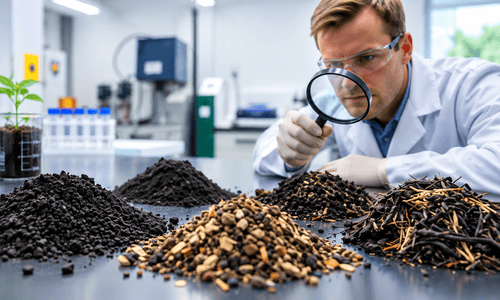
Biochar isn’t new — it’s essentially charcoal, produced by heating organic material like wood or plant waste in a low-oxygen environment. What is new is the precision with which scientists are now engineering it to target specific pollutants.
In a study published in Environmental Science & Technology in February 2026, titled “Leaching of PFOS and PFBS to Groundwater at US Air Force Bases: Could Biochar Offer an Effective Mitigation Strategy?”, the USDA team mixed biochar into contaminated sandy-loam soil and ran it through laboratory soil-column experiments — essentially simulating how contaminants travel through real ground toward groundwater.
The Numbers That Turned Heads
The results were hard to ignore.
A wood-based biochar, produced at temperatures above 900°C and mixed into soil at just 1% by mass, retained more than 99% of PFOS — preventing it from reaching the simulated groundwater layer.
For PFBS, a chemical notoriously harder to trap, the team went a step further: giving the biochar a second thermal treatment at 400°C in open air. The result was leachate with essentially undetectable levels of PFBS.
In plain terms: a relatively cheap, carbon-based material — heated the right way — outperformed expectations against two of the most mobile PFAS compounds known to science.
A Reality Check: This Isn’t a Cleanup Solution Yet
Before anyone imagines bulldozers spreading biochar across contaminated bases, it’s worth pausing on what the study actually shows. This was controlled, lab-based research — not a field deployment. The researchers themselves were careful to frame biochar as a potentially low-cost strategy for protecting groundwater, not a proven, ready-to-deploy fix.
Translating a soil-column experiment into a real-world remediation plan involves variables the lab can’t fully replicate: weather, soil variability, contamination depth, and years of monitoring. Real change moves slower than a single study — but this one has opened a door worth walking through.
The Second Thread: An Invasive Weed Joins the Research
What makes this research more interesting is that it isn’t happening in isolation. The same USDA program is chasing a parallel question using an unlikely ingredient: black mustard, an invasive plant most people would rather eradicate than study.
In earlier work, scientists converted several biomass sources — including manure, black mustard, orange peel, macadamia nutshell, and pine pellets — into biochar at 500°C, then tested each one’s ability to capture DNA from wastewater. Among them, black mustard biochar stood out for its strong genetic-material capture performance.
It’s important to be clear: this is a separate study from the Air Force PFAS research. Different feedstock, different temperature, different target contaminant. But the underlying question connecting both experiments is the same one driving this entire research program.
The Bigger Question Behind Both Studies
Can biochar be deliberately engineered — using different biomass sources, temperatures, and treatments — to trap specific contaminants before they ever reach groundwater, crops, or waterways?
If the answer keeps trending toward “yes,” the implications stretch well beyond military bases. Agricultural waste, invasive plants, and other low-value biomass could potentially be repurposed into targeted contamination barriers — turning a disposal problem into a pollution solution.
That’s still an “if.” But for a contamination crisis that has resisted easy answers for years, a 99% retention rate in the lab is the kind of number that earns a second look — and a lot more funding for what comes next.