


South Korea Prepares Response to Press North Korea for an Apology Over DMZ Blast
South Korea says it is preparing a response intended to push North Korea into apologising for a mine explosion inside the Demilitarized Zone (DMZ) that left two South Korean soldiers seriously wounded. A defence ministry spokesperson confirmed this on Tuesday, 6 October. Seoul has not said what form the response will take.
What Seoul said?
Chung Bin-na, the ministry spokesperson, gave no details on the measures under consideration. She did say North Korea must remove the mines it has laid on the southern side of the Military Demarcation Line (MDL), the boundary that runs through the DMZ.
South Korea also wants Pyongyang to sit down for talks on a second issue: the two Koreas do not fully agree on where the MDL actually runs. Chung said these differing views are one of the factors feeding tension in the area.
Who Seoul holds responsible?
South Korea has blamed North Korean mines for the blast. It cites the findings of a joint investigation carried out with the United Nations Command. This is a significant detail, because the conclusion does not rest on Seoul’s assessment alone.
Pyongyang’s response so far
North Korea has rejected the accusation outright. On Friday, state news agency KCNA reported that Pyongyang called the claim “groundless” and dismissed the demand for an apology. Kim Yo Jong, the influential sister of leader Kim Jong Un, said the North had not deliberately planted mines in the border area, according to KCNA.
That leaves the two sides far apart. Seoul says the mines are Northern, and Pyongyang denies placing them on purpose.
Why the border line is part of the problem?
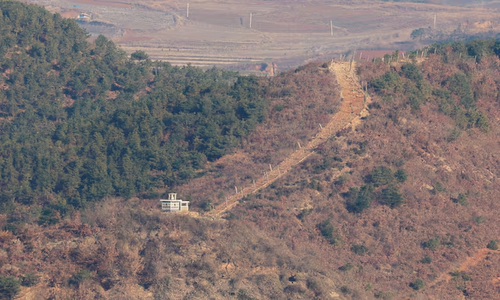
The MDL stretches for more than 200 km between the east and west coasts and is marked by about 1,900 markers. It was drawn in 1953, when the Korean War ended. Since then, access inside the DMZ has been very limited, and some stretches of the line have become hard to identify on the ground.
That helps explain why Seoul is raising the border question alongside the demand for an apology. When two sides read the same line differently, and the terrain is mined and rarely visited, accidents and accusations become more likely.
What to watch next?
Three things will show where this goes. The first is what measures South Korea announces, since none have been named yet. The second is whether North Korea responds to the call for talks on the MDL. The third is whether any mine clearance follows, which both sides would have to accept for it to be workable.