


Fossil Fuels Missing From COP31 Agenda Even as Global Output Keeps Climbing
When nearly 200 countries signed off on a landmark climate deal in Dubai in 2023, it was the first time the world had formally agreed to move away from fossil fuels. Three years on, the promise looks far harder to keep than it did in the conference hall.
Global production of oil, gas and coal has kept growing since then, even as renewable energy expands at a record pace. And when negotiators gather in Turkey next month for the COP31 climate talks, a fresh agreement on fossil fuels is unlikely to be on the table.
Fossil fuels still dominate the energy system
The numbers show how far the world still has to go. According to the Energy Institute, a UK-based professional body for the energy industry, total global energy supply rose 1.7 percent in 2025. Renewables drove much of that growth, but fossil fuels grew too, and they still supplied 86 percent of the world’s energy last year.
The International Energy Agency (IEA) puts the 2024 fossil share at 81 percent of the global energy mix. Oil made up 30 percent, coal 28 percent and gas 23 percent.
The picture differs sharply from one major economy to the next:
- United States: The world’s largest oil and gas producer drew 36 percent of its energy from oil and 36 percent from gas in 2024. Coal contributed 10 percent.
- China: The country uses more than a quarter of the world’s energy, and its mix is still heavily coal-based: 60 percent coal, 18 percent oil and 8 percent gas.
- European Union: Official figures show fossil fuels supplied 69 percent of the bloc’s energy in 2024, with oil at 38 percent and gas at 21 percent. Renewables accounted for 20 percent.
A transition that is real, but uneven
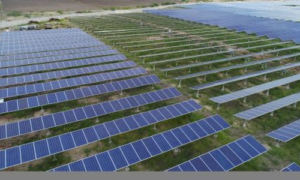
Clean energy is not standing still. Part of its momentum comes from the growing use of electricity in transport, heating and industry. Global solar generation jumped 28 percent in 2025, and solar now supplies 8.5 percent of the world’s electricity, the IEA says.
Still, electricity makes up only about 23 percent of final energy consumption worldwide. That is why some experts urge caution when people talk about a global “transition.” Jean-Baptiste Fressoz, an energy historian at France’s CNRS research institute, argues that the term only holds true on the electricity side.
Even there, the picture is mixed. Coal still generates 34 percent of the world’s power and gas another 22 percent. Renewables, however, have caught up quickly and now match coal at about 34 percent. China is leading that shift: its installed solar capacity has overtaken its coal-fired fleet.
Fossil-based power generation edged down slightly in 2025, but the IEA warned in July that coal-fired output is set to rise this year as the war in the Middle East pushes up energy prices. Fressoz is blunt about the wider pattern. In his view, the idea that one energy source’s rise will cause an equal fall in others is a “pipe dream.”
Why COP31 is lowering expectations?
The wording of the climate talks has itself become a problem. The words “fossil fuels” were not mentioned by name in the final outcome of COP30 in Brazil last year, and they are not expected to feature in the negotiations at COP31.
Romain Ioualalen, global policy campaign manager at the advocacy group Oil Change International, says the subject was “highly divisive” at COP30. Rather than reopen that fight, Turkey, this year’s host, plans to push a voluntary pledge on electrification. Ankara argues it could cut heat-trapping emissions and reduce dependence on imported energy.
Ioualalen also points to what is happening outside the negotiating rooms. Countries such as India and China, he says, do not talk loudly about it diplomatically but are making huge national efforts to build renewable capacity. The IEA expects China alone to account for nearly half of the world’s renewable energy capacity by 2030.
What really drives the energy market?
For Fressoz, the lesson is to keep the importance of climate summits in perspective. What matters, he says, is what happens on the ground, and on the ground the pressures are economic: higher fossil fuel prices, supply chain disruptions and worries about energy security.
His summary of the situation is short and hard to argue with: “The market dictates behaviour.”