


When oil and gas supply routes come under pressure, electricity starts to look like the safer bet. That is the central message of a new International Energy Agency (IEA) report, and it sits at the heart of this week’s energy news. The Strait of Hormuz crisis is pushing governments to ask how much of their economies can run on power they generate themselves, rather than on fuel they have to import.
Alongside the IEA’s findings, there are fresh data points on battery storage in the United States, a nuclear restart in Italy, new fossil fuel exit plans in Europe, and a wave of supply-security moves across Asia, the Middle East and Africa. Here is what matters, and why.
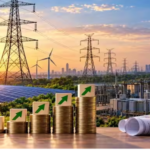
Electricity is moving to the centre of the energy debate
The IEA says electricity is taking an “increasingly central role” in economies worldwide. The analysis was prepared at the request of the COP31 President, Turkey, to inform energy transition discussions at the recent United Nations General Assembly in New York.
The report looks at how fast different regions are electrifying. It does so as countries consider a global target of 35% electrification of final energy consumption by 2035, up from 23% today.
The key finding is encouraging. According to the IEA, faster deployment of technologies that already exist could cost-effectively bring electricity’s share to 33% by 2035. That puts the 35% goal within what the agency calls “striking distance”.
The Hormuz crisis adds a second layer. At current energy prices, even more of the world’s energy use becomes economical to electrify. Many countries are now exploring how electrification can cut their dependence on imported fuels while also lowering emissions.
The authors see “substantial potential” in every region to raise electrification rates above today’s levels at reasonable cost. But they are clear about the conditions: more investment in generation and grids, and smarter, more flexible power systems.
Why the grid is the real test?
Clean power technology has scaled quickly over the past two decades. Solar PV leads the way, with deployment approaching 600 gigawatts in 2025 alone, more than ten times the annual level of a decade earlier.
Yet building supply is only half the story. The World Economic Forum’s latest Energy Transition Index warns that meeting future demand will need “much closer alignment” between the speed of electrification and the ability of power systems to absorb it. In plain terms, you can sell millions of electric vehicles and heat pumps, but if grids cannot handle the extra load, the transition slows down.
Latin America’s minerals opportunity
A new World Economic Forum white paper, Advancing Latin America’s Critical Minerals Potential, was produced with McKinsey & Company. It makes the case that Latin America could become a leading supplier of the minerals needed for batteries, power grids and digital technology.
The starting position is already strong. The region produces about 40% of the world’s mined copper and around 30% of mined lithium.
The weak spot is value capture. Of the critical minerals exported from Latin America and the Caribbean, 62% are raw materials and only 38% are processed goods. That gap shows how much industrial and economic value is leaving the region before refining, processing or manufacturing takes place.
The report suggests the path will differ from country to country. Some may need to strengthen upstream productivity. Others may be able to move into processing, technology and manufacturing, which will likely require advances in technology and cluster-based ecosystems that bring together resources, infrastructure, talent and investment.
There is also a scale problem. Building complete critical minerals ecosystems often takes more investment and capability than a single country can supply, which is why the report puts regional collaboration at the centre of its recommendations. Rising geopolitical competition and demand for resilient supply chains are adding to the opportunity.
Energy news in brief
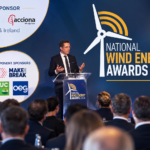
Geneva: the first Energy Forum at the World Economic Forum
Leaders from across the global energy ecosystem met in Geneva this month, with attendees from 35 nations. Europe, North America and China were strongly represented, with additional participation from India, the Middle East and North Africa, and ASEAN.
Discussions covered how to meet fast-growing energy demand, how to build secure, sustainable and affordable systems amid global uncertainty, and how countries and companies can stay innovative and competitive.
The main takeaways were:
- The energy transition faces four connected challenges: security, sustainability, affordability and competitiveness.
- Regional and public-private cooperation is important for driving innovation and resilience.
- Grids and flexibility will largely decide how fast energy systems can grow.
The overall conclusion was that the next phase of the transition is less about picking individual technologies and more about integrating infrastructure, markets and policy so that innovation can be deployed at scale.
United States: a new battery storage record
The US installed 18.9 gigawatt-hours of battery energy storage in the second quarter of 2026, a new quarterly record, according to the American Clean Power Association and Wood Mackenzie.
Italy: nuclear restart gets final approval
Italy’s parliament gave final approval to a government plan to restart nuclear power generation, almost 40 years after a referendum led to the closure of the country’s reactors. Italy wants to deploy advanced modular reactors to help decarbonise industry and strengthen energy security.
Germany: roadmap to exit fossil fuels by 2045
Germany’s cabinet has approved a roadmap to phase out coal, oil and gas by 2045. Electric vehicles and heat pumps are expected to be a key part of the shift. France and the Netherlands have recently adopted similar national roadmaps.
South Korea: reducing reliance on Middle East crude
South Korea aims to cut its dependence on Middle Eastern crude oil from 70% today to 50% by 2035, as it responds to disruption caused by the Iran war. Under its 10-year natural resources security plan, the country has also changed its crude oil stockpiling plan, targeting an expansion of about 20 million barrels by 2030.
United States: a proposed $5 billion Gulf energy fund
According to the Wall Street Journal, the US has proposed investing $5 billion in a new fund to help Middle Eastern countries rebuild energy infrastructure damaged in the Iran war and reduce their reliance on the Strait of Hormuz for oil and gas transport. Saudi Arabia and the UAE are among the countries discussing the plan. This is a proposal at this stage, not a finalised deal.
Kenya: construction starts on a $16 billion refinery
Ground has been broken on a $16 billion oil refinery in Kenya. The project aims to lower fuel costs in East Africa and build regional energy self-sufficiency by replacing imports of refined products. The region has been hit hard by rising fuel prices during the Iran war.
More from the World Economic Forum
Energy Nexus Playbook. Energy systems are closely linked to economies, nature and agriculture, but those links are often misunderstood or poorly managed. The WEF’s Global Future Council on Energy Nexus brought together experts from different regions and sectors to look at this. Its playbook applies a “systems lens” to five priority sectors facing near-term vulnerabilities across their value chains: clean energy; food and agriculture; artificial intelligence and data centres; shipping and ports; and fresh and used water.
Rethinking resilience. For most of the past decade, energy companies have treated cyberattacks, physical sabotage, extreme weather and geopolitical disruption as separate problems. Prajeev Rasiah, SVP and Regional Director for Northern Europe, Energy Systems at DNV, argues that in digitalised, interconnected energy systems this separation is itself becoming the problem. In his view, resilience has to be designed in from the start across public and private actors, not added after something has gone wrong.
What connects these stories?
On the surface, these stories look unrelated: a battery record in the US, a refinery in Kenya, a nuclear law in Italy. Underneath, they share one theme: energy security is now driving energy policy as much as climate goals are.
- Countries hit by the Hormuz and Iran-war disruption are looking for ways to depend less on imported oil and gas.
- Electrification offers one route, nuclear and storage offer others, and diversified supply and stockpiles offer a third.
- All of these routes depend on grids, investment and cooperation between governments and companies.
A note of caution is useful here. The IEA’s 33% figure is an estimate of what faster deployment could achieve, not a forecast of what will happen. Reaching it will depend on investment and grid upgrades actually being delivered. Similarly, the US Gulf fund is still a proposal. These are directions of travel, not finished outcomes.
Key takeaways
- The IEA says faster use of existing technologies could cost-effectively lift electricity to 33% of global final energy use by 2035, close to a proposed 35% target.
- The Hormuz crisis has raised energy prices, making electrification economical in more cases.
- Latin America produces about 40% of mined copper and 30% of mined lithium, but 62% of its critical mineral exports are unprocessed.
- US battery storage hit a quarterly record of 18.9 GWh in Q2 2026.
- Italy, Germany, South Korea, the US and Kenya all announced energy security or transition moves.
- Grids and flexibility remain the main bottleneck for faster electrification.
Frequently asked questions
What does the IEA report say about electrification?
- It says electricity is taking an increasingly central role in economies worldwide, and that faster deployment of existing technologies could cost-effectively reach 33% of global final energy consumption by 2035.
What is the proposed global electrification target?
- Countries are considering a target of 35% of final energy consumption by 2035, up from 23% today.
How much of the world’s copper and lithium comes from Latin America?
- About 40% of mined copper and around 30% of mined lithium, according to the World Economic Forum white paper.
How much battery storage did the US install in Q2 2026?
- A record 18.9 gigawatt-hours, according to the American Clean Power Association and Wood Mackenzie.
When does Germany plan to phase out coal, oil and gas?