




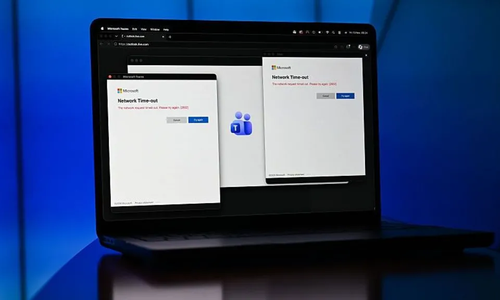
A near day-long failure hit Outlook, Teams and Copilot across more than 70 countries. Microsoft says the cause was a network upgrade gone wrong, not a cyber-attack.
Microsoft has confirmed that its services are back to normal after a worldwide outage that disrupted businesses, governments and ordinary users for almost a full day. Early on Saturday morning, the company said work on the underlying problem was complete. Customers using Outlook, Teams and Copilot should no longer be affected.
The scale was hard to miss. The outage reached more than 70 countries, and the affected products have over 430 million users worldwide.
What Microsoft Says Went Wrong?
Microsoft apologised and explained that the fault was introduced during a “network capacity upgrade.” The company was clear on two points: it was not a cyber-attack, and it was not caused by an artificial intelligence agent.
A spokesperson said: “We are deeply sorry for the disruption this incident has caused our customers and partners.” The statement added that Microsoft understands the trust customers place in its services. A full post-incident report will follow once its review is complete.
How the Outage Unfolded?
- Thursday, 17:54 GMT: Microsoft first acknowledged that users in the Americas could not reach Exchange Online mailboxes. It soon warned that Microsoft 365 might be affected globally.
- Friday, 04:36: The company reported only a “partial recovery” in some regions.
- Friday, 13:32: Microsoft reported “broader improvements” in North America, “sustained improvements” across much of Europe and “encouraging recovery signals” in Asia Pacific.
- Saturday morning: Microsoft confirmed full restoration.
Microsoft said it brought services back gradually because of the sheer scale of the problem. The slower pace was meant to keep systems stable once they were running again.
Who Was Affected?
By Friday, the problems had spread well beyond office inboxes:
- Governments and institutions: The Japanese government, the Philippines Supreme Court and Australia’s spy agency were all hit. So were trains, hospitals and courts in North America.
- United Kingdom: Parts of the NHS, some schools and some police forces were affected. UK cyber minister Liz Lloyd said the impact on critical frontline services, such as 999 calls, was “limited,” and that the transport network saw no disruption.
- Canada: The national rail network warned that passengers might not receive email updates about their trips. Hospitals across the country also had email problems.
- United States: Staff at the House of Representatives said the outage cost an entire day of legislative work, because everything runs through Outlook.
- Singapore and India: Singapore’s government said some of its systems were affected, and work was disrupted for many people in India on Friday.
- Turkey: Advisers and officials at the COP31 climate summit in Antalya were frustrated at being unable to reach Outlook.
The Human Cost
Smaller businesses and individuals felt it just as sharply. Peter Pentz, a winemaker on South Africa’s Cape West Coast, said his business was effectively brought to a “standstill.” He said communication with export partners stopped and “critical production work” was halted, because the winery relies on these systems for parts of its daily operations.
In England, a first-time buyer named Georgia from Staffordshire had waited eight months to complete her house purchase. The outage delayed it. Her solicitor warned that contacting other agencies might be impossible, and she pointed out that hundreds of other completions were happening the same day.
What Experts Are Saying?
Some workers may have quietly welcomed a day without email. Experts say the bigger lesson is about dependence.
Rob Demain, chief executive of cybersecurity firm e2e-assure, called the outage “a stark reminder of how heavily we rely on a handful of big tech providers.”
Matt Saunders, field chief technology officer at consultancy Adaptavist, said guarding against a repeat is difficult. He noted that classic disaster planning suggests using a second service for resilience. In practice, he said, it is almost impossible for a business to function without tools such as Microsoft’s. His advice was that organisations need a clear plan for how to work without them when incidents like this happen.
What Comes Next?
The full post-incident report will matter most. It should explain how a capacity upgrade caused a failure of this size, and what Microsoft will change to stop it happening again. For businesses and public bodies, the practical question is how long they could keep working if their main platform went dark again.
FAQs
Is Microsoft 365 working again?
- Yes. Microsoft said early on Saturday that the underlying problem had been fixed and that Outlook, Teams and Copilot users should no longer be affected.
What caused the Microsoft outage?
- Microsoft says the issue was introduced during a “network capacity upgrade.” It said the cause was not a cyber-attack or an AI agent.
How long did the outage last?
- Users began reporting trouble on Thursday. Services began to recover on Friday afternoon UK time, nearly 24 hours after the first issues, and full restoration came early Saturday.
Which services were affected?
- Outlook, Teams and Copilot, along with other Microsoft 365 tools. More than 430 million people use the affected products.
How many countries were hit?
- More than 70 countries were affected, including the UK, US, Canada, India, Japan, Singapore, Australia and Turkey.
Will Microsoft publish a full explanation?
- Yes. A full post-incident report will be released after Microsoft completes its review.