


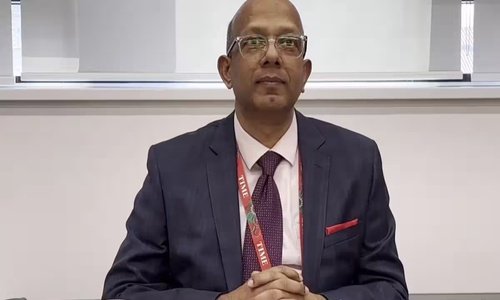
India’s energy security remains a priority despite Western criticism and US sanctions over New Delhi’s purchase of Russian energy resources, according to Vinay Kumar, India’s Ambassador to Russia. He stressed that the country needs reliable supplies at competitive prices for its 1.4 billion people.
Kumar also used the occasion to talk about trade. He said India and Russia are on course to meet the bilateral trade target their leaders set in 2024.
Key Takeaways
- Policy stance: India’s priority is the energy security of 1.4 billion people, through diversified sources and predictable supplies at the most competitive prices.
- Europe comparison: Kumar said Europe has imported more than $320 billion of energy from Russia since 2022, far more than India-Russia trade.
- Trade volume: bilateral trade turnover reached $38 billion in the first six months of this year.
- Trade target: both countries aim for $100 billion in bilateral trade by 2030.
- FTA talks: India is negotiating a Free Trade Agreement with the Eurasian Economic Union (EAEU).
“The Policy and Practice Are Very Clear”
Kumar was responding to statements from Western countries and to US sanctions linked to India’s energy imports from Russia. He did not argue the point on its own terms. Instead, he turned attention to Europe’s own record.
“Those comments apart,” he said, Europe has bought more than $320 billion worth of energy resources from Russia since 2022. That figure, he noted, is far bigger than the trade between India and Russia.
He then set out the Indian approach in plain terms. For India, he said, policy and practice are very clear: ensure the energy security of 1.4 billion people through diversified sources and predictable sourcing of these products at the most competitive prices.
India has consistently held that its energy purchases are guided by national interest and by the need for affordable, reliable supplies. Kumar’s remarks come as scrutiny of India’s energy trade with Russia continues in the wake of the Ukraine conflict and Western measures against Moscow.
Where India-Russia Trade Stands?
Kumar said India and Russia recorded a bilateral trade turnover of $38 billion in the first six months of this year. His message was that the volume is encouraging, but the mix needs to widen. “We have to both find new products to expand our trade basket,” he said, and also raise the turnover of the individual products India already exports to Russia.
He named three focus areas for strengthening the relationship:
- Diversifying India’s export basket so trade does not depend on a narrow set of goods.
- Improving market access in Russia, including work with Russian authorities on standards and non-tariff barriers. These hurdles are most visible in agricultural and marine products. The effort also aims to help new Indian companies with a record of high-quality exports enter the Russian market.
- Advancing a Free Trade Agreement with the Eurasian Economic Union, which Kumar said would help Indian exporters grow sales in Russia and in the EAEU’s other member markets.
Confidence on the $100 Billion Target
Kumar expressed optimism that the current growth trajectory will deliver the goal set by the two countries’ leaders in 2024: $100 billion in bilateral trade by 2030. “At the rate at which our trade is growing,” he said, India should be able to meet it.
His remarks came at the second edition of the India-Russia Business Forum, titled Tatarstan Initiative Mutual Efficiency (TIME), held in Kazan. The forum is meant to deepen business interactions, strengthen commercial partnerships and explore new areas of economic cooperation between the two countries.
What This Means?
The ambassador’s comments reinforce a position New Delhi has held for some time: energy policy is built around the interests of its 1.4 billion people, and it will look for supply wherever it is dependable and competitively priced. The Europe comparison is also a deliberate message. It suggests India sees the criticism as uneven.
The next things to watch are the progress of the EAEU trade talks, any easing of non-tariff barriers for Indian agricultural and marine exporters, and whether sanctions pressure changes the way India buys Russian energy.
Frequently Asked Questions
Who is Vinay Kumar?
- He is India’s Ambassador to Russia.
What did he say about US sanctions and Russian energy?
- He said India’s energy security remains a priority despite Western criticism and US sanctions, and that India’s policy is to ensure supplies for 1.4 billion people through diversified sources at the most competitive prices.
How did he compare India’s trade with Europe’s?
- He said Europe has imported more than $320 billion of energy resources from Russia since 2022, which is far bigger than the trade between India and Russia.
How much trade did India and Russia record this year?
- Bilateral trade turnover was $38 billion in the first six months of the year.
What is the bilateral trade target?
- $100 billion by 2030, a goal set by the leaders of both countries in 2024.
What is India negotiating with the Eurasian Economic Union?
- A Free Trade Agreement, intended to boost Indian exports to Russia and the EAEU’s other member countries.
Where were these remarks made?
- At the second India-Russia Business Forum, titled Tatarstan Initiative Mutual Efficiency (TIME), in Kazan.