




Juniper Green Energy has reported a strong September quarter, with revenue and EBITDA both rising several times over from a year earlier. The company is also putting battery energy storage systems (BESS) at the centre of its next phase of growth. At the same time, the numbers show how much capital and debt it takes to build a business at this scale.
Q2 FY27 at a Glance
| Metric | Q2 FY27 | Change |
|---|---|---|
| Consolidated revenue from operations | ₹344.66 crore | 2.4 times year-on-year |
| EBITDA | ₹339.55 crore | 2.6 times year-on-year |
| Total income | ₹371.64 crore | Up 132% |
| EBITDA margin | 91.36% | Up from 81.02% a year earlier |
| Consolidated profit after tax (PAT) | ₹53.56 crore | Against a loss of ₹18.40 crore in Q2 FY26 |
| Cash PAT | ₹152.55 crore | 3.9 times year-on-year |
Here are the five developments that matter most.
1. Operating Scale Is Driving Earnings
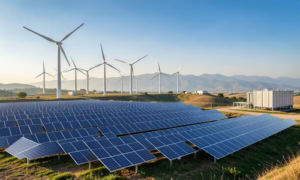
The sharp rise in revenue and EBITDA reflects a larger operating portfolio. In the first seven months of FY27, Juniper commissioned 1,036 MWp of renewable energy capacity and around 503 MWh of BESS. Its operational portfolio now stands at 2,844 MWp of renewable capacity and 604 MWh of BESS.
2. Profitability Is Improving, but Financing Is a Heavy Cost
While EBITDA rose sharply, the costs below it rose too. Consolidated finance costs climbed to ₹201.14 crore in Q2 FY27 from ₹96.52 crore a year earlier. Depreciation rose to ₹98.99 crore from ₹57.99 crore. If interest rates keep rising, those numbers could come under further pressure.
For a capital-intensive business, the real test is whether strong operating earnings keep turning into steady net profit as the portfolio expands.
3. BESS Is Emerging as a Major Growth Driver
Juniper is targeting about 4,500 MWh of BESS installations by June 2027 and 10,000 MWh by March 2028. Its total portfolio already includes 8,989 MWh of BESS capacity, counting both operational and under-construction projects.
These targets point to a substantial build-out of storage alongside renewable generation. One caveat: the company has not given a separate revenue or earnings outlook for the storage business, so it is hard to judge yet how much BESS will add to profits.
4. A Large Pipeline Offers Visibility
Juniper’s total portfolio is 11,218 MWp of renewable capacity and 8,989 MWh of BESS. According to the company:
- 98% of the portfolio is secured through long-term power purchase agreements, typically running for 25 years
- 98% of offtakers are rated A or above
- More than 5,200 MW of surplus grid connectivity is available for future bids
Long-term contracts with strongly rated buyers give the company more predictable cash flows, which matters for a business funded largely through debt.
5. Growth Still Demands Substantial Capital
Juniper has spent ₹18,895 crore in cumulative capital expenditure through September 2026, including ₹2,591 crore in Q2 alone. Its consolidated borrowings remain substantial, reflecting the investment needed to build the portfolio.
On a positive note, ICRA upgraded the company’s credit rating to AA- (Stable).
The Bottom Line
The quarter shows a company moving from heavy investment to real earnings. Revenue, EBITDA and profit are all up, the contracted pipeline is large, and storage is set to become a bigger part of the business. The points to watch are finance costs, borrowing levels and how soon BESS starts contributing visible earnings.