


Australia’s Home Battery Boom Is Driving a Fresh Rise in Rooftop Solar
A battery rebate was meant to boost home storage. It has also brought rooftop solar back to life in Australia. New Clean Energy Council (CEC) data shows record solar installations and household storage tracking 79% above official forecasts. India is adding rooftop solar faster than ever, but its storage is largely being built elsewhere.
The numbers from the first half of 2026
According to the CEC’s latest Rooftop Solar and Storage Report, Australian households installed 180,878 rooftop solar systems and 276,011 home batteries in the first six months of 2026. The new solar added 1,894 MW. That is 41% more than a year earlier and the highest total for any six-month period on record. The June quarter set a record in every state.
Batteries are now being fitted at a rate of 153 for every 100 solar systems. In the second half of 2025, the figure was 130.
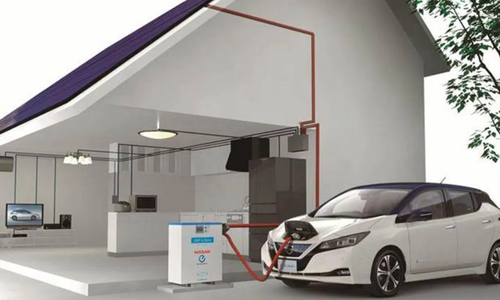
The driver is the federal Cheaper Home Batteries Program. In its first twelve months it has supported 457,439 installations and 12.9 GWh of storage.
The change in direction is striking. The CEC’s previous report asked whether rooftop solar had peaked, after annual installations dropped below 300,000 in 2025 for the first time since 2020. They are now on track to pass 300,000 again this year. The report credits the battery rebate with lifting both the number and the average size of solar systems, not just storage. It also points to a wider backdrop of fuel price spikes linked to geopolitical shocks, including higher diesel costs.
How far Australia has come?
Roughly two in five Australian homes now have rooftop solar, and one in seven has a battery. If the current pace continues, behind-the-meter storage could reach about 59.2 GWh by 2029-30. That is 79% above the 33 GWh assumed in the market operator’s Integrated System Plan. Rooftop solar on the main grid would reach 40.3 GW, which is 13% above forecast.
Since 2019, households have installed 21,979 MW of rooftop solar. That is close to the capacity of all the coal plants still operating. The CEC adds a caution: this is capacity, not the energy actually delivered.
What the scheme design teaches?
The way the rebate is built is as revealing as the volumes. After the settings changed in May, the average battery fell from about 35 kWh at the end of April to around 25 kWh in June. That shows how a tapering subsidy changes what households choose to buy.
The approved-product list has also grown a great deal. Approved battery models rose from 1,259 to 3,406, alongside 3,900 approved inverters and 3,586 modules. In effect, that list is the scheme’s gatekeeper.
The cost of scaling fast
Growth has put pressure on consumer protection. Complaints against approved sellers rose from 317 to 567 in six months, and compliance actions went from 53 to 88. Of 143 non-compliance findings, 34% related to sales paperwork such as quotes and contracts.
Most batteries are still used mainly for self-consumption. The CEC is therefore pushing for virtual power plants, flexible tariffs and a Flexibility Value Study. The aim is to reward households that support the grid at peak times.
India: strong on panels, storage built elsewhere
India’s rooftop numbers are, if anything, larger. An industry count puts rooftop solar additions at about 6.4 GW in the first half of 2026, up 104% on the same period of 2025. Most of it came under PM Surya Ghar. The scheme offers a subsidy of up to Rs 78,000 for residential systems up to 3 kW, and it targets one crore households. Installations passed 16,000 a day in July, more than triple the pace of October 2025.
Storage tells a different story. The latest estimate from the India Energy Storage Alliance (IESA) puts cumulative installed battery storage at over 12.6 GWh by September 2026, largely in standalone grid-scale projects. Australian households alone bought 12.9 GWh in a single year.
The comparison is not like for like. The time periods and ownership models differ. Still, it shows where each country has pointed its incentives. India has backed the panel on the roof and the battery at the substation. Australia has backed the battery in the garage.
Why it matters for India?
This matters for a grid where solar eases daytime demand while shortages continue at night. Whether a tapered, product-approved and consumer-protected battery rebate could be attached to Surya Ghar-type installations is a policy question. It is not a recommendation for solar plus storage.
Australia’s complaints data show the price of scaling fast without safeguards. Its installation data show what a well-aimed second incentive can do for a market many thought had matured.