


Google, Tesco and LEGO: Sustainability This Week
This week’s sustainability news comes from three different directions: a major infrastructure commitment, a leadership hire at the UK’s biggest grocer, and a materials experiment from a toy maker. Two more stories, on supply chain traceability and thermal energy, show where corporate sustainability work is heading.
Google Commits €13bn to Finland’s Digital Infrastructure
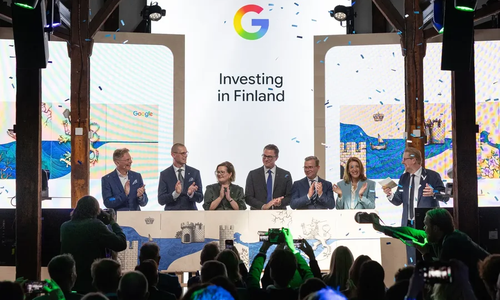
Google plans to invest at least €13bn (about US$14.6bn) in Finland between 2027 and 2028. This is an expansion of work that has been going on in the country for more than 15 years. The plan covers data centre construction and supporting infrastructure at four sites: Hamina, Kajaani, Muhos and Vaala.
Ruth Porat, President and Chief Investment Officer of Alphabet and Google, described it as the company’s largest single investment in Europe. She also said that growth will be paired with new energy capacity, grid upgrades and energy affordability initiatives.
What to watch: Announcing a big number is easy. The real test is whether the new clean energy capacity and grid work arrive on the same timeline as the data centres. Anyone tracking this story should follow that, not just the headline figure.
Tesco Appoints a New Head of Sustainable Transformation
Tesco is the UK’s largest supermarket chain, with roughly 28.5% market share and more than 330,000 employees. It is working towards net zero while managing environmental and supply chain sustainability across a huge operation.
Callum White is joining as Head of Sustainable Transformation after 13 years at PwC. At this scale, sustainability progress depends on supplier relationships and day-to-day operations, so a leader with a long advisory background could bring a structured, data-driven approach to the role. How much that shows up in results will only become clear in the coming reporting cycles.
LEGO Group Explores E-Methanol
LEGO has been bringing recycled and renewable materials into its bricks and elements since 2018. Today, 50% of LEGO sets contain at least one element made with 89% Brazilian sugarcane.
The company is now exploring other renewable materials, including e-methanol, which will be used to make more than 90 LEGO elements, including Minifigure hands. A small piece like a Minifigure hand is a practical place to test a new material before wider use.
Merck and The Hashgraph Group Pilot Deforestation-Free Cocoa
Merck and The Hashgraph Group have launched a pilot traceability programme for cocoa supply chains. It combines three systems to create a verifiable record for each product:
- The Hashgraph Group provides its TrackTrace Digital Product Passport platform.
- Merck supplies M-Trust physical authentication technology.
- PwC Germany advises on business process design and implementation, helping smallholder farms meet new compliance demands.
The point worth noting is the support for smallholder farms. Compliance rules are often written with large producers in mind, and small farms can struggle to meet them without help.
Johnson Controls on Waste Heat and Energy Constraints
At Sustainability LIVE @ Climate Week NYC, Katie McGinty, Vice President and Chief Sustainability Officer at Johnson Controls, spoke about energy constraints. She said they are no longer only an environmental issue but a real obstacle to business growth and national security.
As high-density computing and advanced biopharma manufacturing expand quickly, business leaders increasingly see thermal waste and power use as top business risks. This links back to the Google story: more data centres means more demand for efficient cooling and heat reuse.
The Takeaway
Across all five stories, sustainability is moving from a standalone goal into core business planning: infrastructure investment, leadership hiring, materials sourcing, supply chain compliance and energy strategy.w