


Four-hour battery storage now costs less than gas peaker plants in markets around the world. That is the central finding of a new Wood Mackenzie analysis, published Thursday. The firm links the shift to two pressures on gas: a long queue for new turbines and the extra power demand coming from data centres.
Key Takeaways
- Wood Mackenzie says the levelised cost of electricity (LCOE) for four-hour battery storage is now below that of gas peakers across global markets.
- In the US, for a 2026 commercial operation date, four-hour storage is 65% to 75% cheaper than new open-cycle gas peakers, depending on state-level carbon pricing, according to a firm spokesperson.
- Gas turbine prices are projected to reach $600/kW by the end of 2027, a 195% rise since 2019.
- Single-axis tracker solar is the lowest-cost new-build technology in 43 of 48 modelled markets.
Why Gas Peaking Is Getting Expensive?
Peaker plants exist for a narrow job: they run for a few hours when demand spikes. Their economics depend on how cheaply they can be built and how stable their fuel costs are. Both are now under strain.
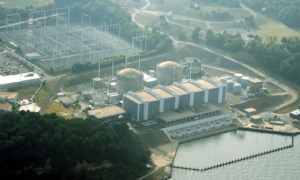
Wood Mackenzie says gas investment in North America is entering “a supply deficit cycle through the late 2030s,” driven by data centre load growth. In plain terms, more buyers are chasing the same limited supply of turbines, which keeps thermal capital costs high.
The numbers support that. Wood Mackenzie said in April that turbine prices are projected to hit $600/kW by the end of 2027. The three major manufacturers, GE Vernova, Siemens Energy and Mitsubishi, each report backlogs between 35 GW and 116 GW, even as they plan to expand capacity. A developer ordering a turbine today is joining a long queue.
Ahmed Jameel Abdullah, principal analyst at Wood Mackenzie, called the shift “decisive and widening.” He said turbine shortages and fuel volatility are pushing peaking costs up, while growing battery manufacturing keeps pulling storage costs down.
What the Numbers Do and Do Not Show?
One caveat matters for anyone quoting this report. Wood Mackenzie did not publish exact prices. The 65% to 75% US figure came from a spokesperson, in an email to Utility Dive, and it applies to a 2026 commercial operation date. The range depends on whether state-level carbon pricing applies. So treat it as a modelled comparison, not a quote from a procurement contract.
LCOE is also a cost measure, not a full picture of value. A peaker and a four-hour battery do slightly different jobs, so utilities will still weigh reliability, fuel supply and grid needs alongside cost.
Solar and Wind: The Wider Picture
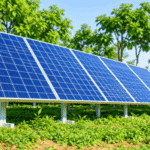
The report says the same economic logic is reaching baseload. Single-axis tracker solar is now the lowest-cost new-build option in 43 of 48 modelled markets, with onshore wind leading in the other five. In the most competitive markets, Saudi Arabia and the UAE, solar LCOE is on track to fall below US$20/MWh by 2033.
Regional Differences
Middle East and Africa: Four-hour storage is forecast to fall 33% to $80/MWh by 2035. The report says it will displace gas peaking on cost in every gas market in the region.
China: It remains the global cost benchmark for storage, more than 55% below the Asia Pacific average. Wood Mackenzie says manufacturing scale is “redrawing the global cost map.”
North America: Near-term solar costs are under pressure from tariffs, anti-dumping and countervailing duty actions, and new import restrictions. Distributed solar is seeing the sharpest price increases. Utility-scale solar is partly protected by 168 GW of safe-harboured capacity, although module prices are still expected to rise about 5% a year through 2030. For residential and commercial projects, module prices are forecast to rise 6% in 2027 and a further 14% in 2028.
Policy Risks to Watch
Onshore wind LCOE is expected to fall 16% by 2060, despite near-term uncertainty from policy changes and possible Section 232 effects on turbine pricing.
For storage, tax credits continue to give a competitive edge by partly offsetting foreign entity of concern restrictions and supply chain constraints. Wood Mackenzie expects a cost spike after the investment tax credit phases out from 2038. Over the long term, new chemistries, hardware commoditisation and domestic supply chain growth should bring storage LCOE down 10% by 2060.
What This Means?
This is my read of the report, not part of Wood Mackenzie’s findings. The case for storage is no longer only about clean energy targets. It is increasingly about speed and cost certainty. A utility facing a multi-year turbine wait and unpredictable fuel prices has a practical reason to look at batteries, which can be built faster and are getting cheaper.
The risks are real too. Tariffs, trade rules and tax credit timelines could change the near-term picture in North America. Anyone planning a project should watch those closely.
Frequently Asked Questions
Is four-hour battery storage really cheaper than gas peakers?
- According to Wood Mackenzie’s LCOE analysis, yes, across markets worldwide. In the US, the firm says it is 65% to 75% cheaper for a 2026 commercial operation date.
Why are gas peakers getting more expensive?
- Turbine backlogs, rising prices and fuel volatility. Data centre load growth is adding to demand for new generation.
Does this mean gas plants will disappear?
- The report compares costs. It does not say gas will vanish, only that storage is displacing it on cost.