


FERC Rejects Oklo’s Bid to Rejoin PJM’s Interconnection Study Cycle, Leaving 750-MW Virginia Project in Limbo
A regulatory setback this week is threatening to push back one of the more ambitious mixed-technology energy projects in Virginia by at least a year and a half — and it’s raising fresh questions about how project developers and grid operators navigate an increasingly congested interconnection process.
The Federal Energy Regulatory Commission (FERC) on Thursday rejected a complaint filed by Oklo, the advanced nuclear technology company, which had sought to reverse PJM Interconnection’s decision to drop its 750-MW Virginia project from the grid operator’s current interconnection study cycle. The ruling means the project — which combines nuclear, fuel cell, and gas-fired generation — will likely face significant delays, exactly the outcome Oklo had gone to federal regulators to avoid.
Why PJM Dropped the Project — And Why FERC Backed That Decision
At the heart of the dispute is a straightforward but consequential question: did PJM overstep its own rules when it withdrew Oklo’s project from the study cycle in early August?
FERC’s answer was no. The commission found that Oklo failed to demonstrate PJM had violated its tariff in dropping the project, and — perhaps more tellingly — noted that Oklo hadn’t resolved application flaws that PJM staff had already flagged. In regulatory terms, that’s a fairly clean rejection: it’s not that PJM acted improperly, it’s that Oklo’s own paperwork didn’t hold up to scrutiny.
That said, FERC didn’t let PJM off entirely without commentary. In its order, the commission struck a notably pointed tone about the bigger picture facing the region’s grid operator:
“Although we find that Oklo failed to demonstrate PJM violated its tariff, we note that, in order to meet growing demand in the PJM region, it is critical that PJM collaborate with project developers before, during, and after the interconnection application process to ensure guidance and expectations are clearly understood and properly implemented.”
That line matters. It reads less like a rebuke and more like a warning shot — a signal that as PJM’s interconnection queue grows more crowded amid surging electricity demand, the burden of clear communication and process transparency falls at least partly on the grid operator, even when individual complaints don’t succeed.
What Happens Next for Oklo?
FERC didn’t leave Oklo without options. The commission pointed to two paths forward: Oklo can correct the errors in its interconnection application and resubmit the project for PJM’s next study cycle, or — if speed is the priority — it can apply through PJM’s Expedited Interconnection Track process, which remains open for applications until December 31, 2027.
Neither option is a full fix. Oklo itself said in its original complaint that missing the current study cycle would delay the project by at least 18 months and drive up its costs — a meaningful setback for a company racing to commercialize next-generation nuclear technology at a moment when data centre and AI-driven power demand is putting unprecedented pressure on grid capacity across the PJM footprint, which spans Washington, D.C., Virginia, and more than a dozen other states.
Inside the Project
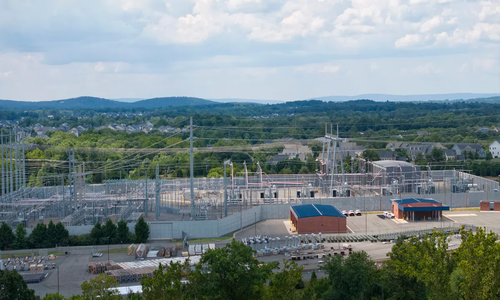
The scale and composition of the project help explain why this ruling carries weight beyond a single company’s regulatory filing. Oklo’s proposed development would interconnect to the grid through two Dominion Energy substations located between Washington, D.C., and Richmond, Virginia — placing it squarely in one of the fastest-growing electricity demand corridors in the country, driven largely by the region’s dense concentration of data centres.
The project itself is a genuine hybrid: 150 MW of advanced nuclear generation, paired with 300 MW of fuel cells and 300 MW of gas-fired generation, for a combined 750 MW of capacity. The nuclear component draws on Oklo’s core technology bet — its Aurora powerhouses, compact metal-fueled fast reactors designed to generate between 15 MW and 75 MW each, positioning the company among a small group of firms trying to commercialize advanced nuclear at a meaningfully smaller, more distributed scale than traditional reactors.
A Wider Pattern Emerging at FERC
Oklo’s case isn’t happening in isolation. It’s one of six similar complaints currently pending before FERC, all raising the same underlying grievance: that PJM improperly dropped projects from its current interconnection study cycle.
The other five complaints were filed by Advantage Capital Renewables, Agilitas Energy, Current Hydro, Lanyard Power Holdings, and RWE Americas — a mix of renewable energy and independent power developers, suggesting this isn’t a nuclear-specific friction point but a broader structural strain within PJM’s interconnection process itself.
That volume of complaints, arriving in relatively close succession, points to something bigger than any single rejected application. It suggests PJM’s interconnection study cycle — the gatekeeping mechanism through which new generation projects get evaluated and approved for grid connection — is under real strain as demand for new capacity accelerates faster than the process was originally built to handle.
The Bigger Picture
For an industry watching PJM closely — given its role as the largest grid operator in the U.S. by both geography and market size — this ruling offers a mixed signal. On one hand, FERC’s rejection reinforces that PJM’s procedural decisions, at least in this instance, were within bounds. On the other, the commission’s own commentary about the need for better collaboration between PJM and developers suggests regulators are watching the queue-management process with growing scrutiny.
For Oklo specifically, the setback is a reminder that even well-capitalized, high-profile advanced energy companies aren’t immune to the administrative friction points that have long plagued grid interconnection in the U.S. Whether the company opts to refile for the standard cycle or pursue the expedited track, the clock on its Virginia project — and the demand it was meant to help serve — is now running noticeably slower than planned.
Oklo, headquartered in Santa Clara, California, did not immediately respond to a request for comment.