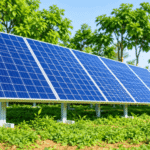





India has spent years learning how to generate clean electricity. The harder lesson is now arriving: making sure that power is still there when people actually need it. A new ₹14,500 crore energy storage initiative is meant to strengthen the reliability of renewable power and reduce dependence on coal. It also aims to build domestic battery manufacturing, while facing up to China’s grip on the global supply chain.
The real challenge is no longer generation
Solar and wind capacity keeps growing, but the sun does not set on the grid’s schedule. Solar output peaks in daylight hours, while electricity demand often climbs in the evening. Wind generation shifts with the weather.
Without enough storage, surplus renewable power can go to waste, and conventional power plants have to step in when output drops. Storage is what changes that equation. It lets the grid hold on to cheap midday power and release it when households, industries and businesses need it most.
What the Cabinet has approved?
On November 4, 2026, the Union Cabinet approved a ₹14,500 crore Viability Gap Funding (VGF) scheme. Here is what it covers:
- Target: 92 gigawatt-hours (GWh) of grid-scale energy storage between 2026–27 and 2030–31
- Estimated investment: about ₹97,600 crore
- Pumped hydro storage: 60 GWh
- Battery Energy Storage Systems (BESS): 30 GWh
- Emerging storage technologies: 2 GWh
- Domestic content: a minimum of 40% for battery storage projects, in line with the government’s push for indigenous manufacturing
The significance goes beyond installing batteries. The scheme is an attempt to change how India’s electricity system operates, a system that has traditionally leaned on coal-fired plants to provide reliable power when renewable output fluctuates.
How storage helps, and where it falls short?
Batteries absorb surplus electricity and release it during peak demand. Pumped hydro works on a similar idea, using spare power to move water to a higher reservoir and releasing it through turbines later.
Together, these technologies can:
- reduce the curtailment of renewable energy
- make the grid more flexible
- limit the need for extra coal-based balancing capacity
There is an important caveat. Storage cannot end coal dependence overnight, especially during long stretches of low renewable generation.
The scale of the task is also worth keeping in mind. According to the Ministry of Power, India’s grid-scale storage requirement is expected to reach 411 GWh by 2031–32. The new programme is an important step, but it covers only part of what the country will need.
The China problem
The harder question sits in the supply chain. China dominates several key stages of lithium-ion battery production, particularly lithium iron phosphate (LFP) batteries. These are widely used for stationary storage because they are cost-effective and durable.
A May 2026 analysis by the Institute for Energy Economics and Financial Analysis (IEEFA) puts the dependence in numbers. China accounts for approximately:
- 74% of global lithium refining
- 80% of cobalt refining
- 98% of LFP cathode active material production
India’s own lithium refining capacity is negligible, and its battery cell manufacturing industry is still developing.
The same analysis estimates that India’s demand for advanced chemistry cell batteries could rise from 28 GWh in 2025 to about 272 GWh by FY2030. Yet under the government’s ₹18,100 crore production-linked incentive programme, only 1.4 GWh of cell manufacturing capacity had been commissioned by early 2026.
That gap leads to what can fairly be called a strategic contradiction. India is investing heavily in renewables to cut its reliance on imported fossil fuels, but the transition could create a new kind of external dependence on imported batteries and processed minerals.
Assembling battery packs in India is not the same as self-reliance if the cells, cathodes, anodes, electrolytes and manufacturing equipment still come from China. Real change needs coordinated action across the whole battery value chain.
What would make a difference?
Several steps stand out:
- Speed up domestic cell manufacturing, rather than stopping at pack assembly.
- Build processing capacity for lithium, nickel and other critical minerals. The Cabinet’s simultaneous approval of a ₹2,814 crore capital-support scheme for critical mineral processing gives an opening to link mineral refining with battery manufacturing.
- Secure long-term mineral supply through partnerships with countries such as Australia, Argentina and Chile.
- Encourage Indian companies to acquire overseas mineral assets.
- Develop recycling facilities that can recover valuable materials from used batteries.
The Ministry of Heavy Industries has itself acknowledged that Chinese dominance in technology and mineral processing creates difficulties for Indian manufacturers, including restricted access to some refining technologies. Overcoming this will need technology development, international partnerships and a predictable domestic market.
Money and execution risks
Financing is another major hurdle. Storage projects need heavy upfront investment, while revenues depend on electricity price differences, how often the storage is used, contract terms and the financial health of power distribution companies.
The VGF scheme can improve viability by cutting initial capital costs, and competitive bidding may push efficiency up and tariffs down. But poorly designed contracts, delayed payments and low utilisation could still undermine project economics.
Pumped hydro faces its own set of problems: land acquisition, environmental approvals, water availability and long construction periods. Its economics need to be judged separately from battery storage.
The government’s message
Prime Minister Narendra Modi, announcing the Cabinet decision, described the initiative as a major effort to expand reliable electricity supply, strengthen energy security and reduce import dependence. The challenge now is turning financial support into commissioned capacity, commercially viable projects and genuine domestic manufacturing strength.
The bottom line
The ₹14,500 crore programme could make energy storage a central part of India’s electricity infrastructure. Its long-term success will depend not just on how much electricity India can store. It will also depend on how economically it can store it, how reliably the systems perform, and how much of the underlying technology India can make on its own.
The larger goal is to make sure the shift from fossil fuels to renewables does not simply replace one strategic dependence with another.
FAQs
What is the ₹14,500 crore energy storage scheme?
- It is a Viability Gap Funding scheme approved by the Union Cabinet on November 4, 2026, to develop 92 GWh of grid-scale energy storage between 2026–27 and 2030–31.
How much total investment is expected?
- The programme is expected to involve an estimated investment of ₹97,600 crore.
How will the 92 GWh be divided?
- Pumped hydro storage will account for 60 GWh, battery energy storage systems for 30 GWh, and emerging technologies for 2 GWh.
What is the domestic content requirement?
- Battery storage projects under the scheme must meet a minimum domestic content requirement of 40%.
Will this end India’s dependence on coal?
- Not immediately. Storage can reduce the need for coal-based balancing power, but it cannot fully replace it, especially during prolonged periods of low renewable generation.
How much storage does India need in total?
- According to the Ministry of Power, India’s grid-scale storage requirement is projected to reach 411 GWh by 2031–32, so this programme covers only part of the need.
Why does China matter for India’s battery plans?
- China dominates global battery supply chains, including about 74% of lithium refining, 80% of cobalt refining and 98% of LFP cathode active material production, according to a May 2026 IEEFA analysis.