



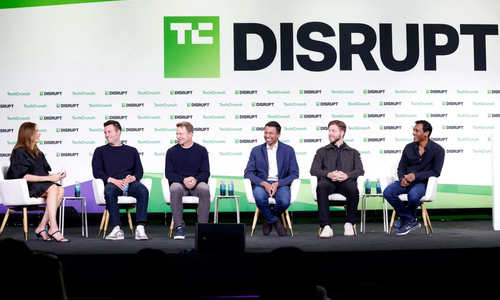
For decades, venture capital ran on an unwritten rule: a firm does not back two companies that compete head-on. At TechCrunch Disrupt earlier this week, the partners of Benchmark said openly that the AI boom is straining that rule.
The admission carries weight because of who made it. Benchmark’s reputation rests on 10-to-15-year partnerships with founders at the earliest stage. When a firm built on loyalty says conflicts are coming, the rest of the industry has reason to pay attention.
Why the rule is under pressure?
The strain did not appear overnight. OpenAI and Anthropic, the two towering AI labs, now share dozens of the same investors.
A recent dispute made the problem concrete. At the end of September, Factory, a startup that builds an AI agent to write software, said it was firing board observer and adviser Chris Degnan for “unethical conduct involving Cognition.” Cognition is Factory’s direct rival and the maker of the Devin coding agent.
Factory’s CEO alleged that Degnan had discussed a job at Cognition while privy to Factory’s board-level discussions. Degnan said he had already resigned and denied sharing anything confidential. He then announced he was joining Cognition as chief revenue officer.
Investor Vinod Khosla sided with Degnan on X, criticising Factory’s CEO and calling the company “a struggling second tier competitor,” according to TechCrunch. Khosla Ventures backs both companies.
What Benchmark’s partners said at Disrupt?
Asked whether the pact against backing rivals still holds as portfolio companies expand into one another’s territory, Benchmark’s partners described conflicts as a matter of necessity, not preference.
Eric Vishria said companies evolve quickly. Businesses pivot and change, he said, so “you are going to get conflicts.” He added that Benchmark stays committed to each founder and keeps what it learns confidential. He also played down how much a VC could pass along in the first place, noting that investors are not product or technology experts.
Without naming the Factory and Cognition dispute directly, Vishria suggested Benchmark has been fortunate not to land in that kind of direct conflict. Exclusivity, he said, remains “really important” at the very early stage Benchmark favours, but “things are evolving.”
Chetan Puttagunta argued that AI is speeding the problem up. As the cost of building software “effectively goes to zero,” he said, founders have become more ambitious. They see a large “surface area” and want to claim all of it, which makes it more likely that portfolio companies collide.
He drew a line between two situations. A direct competitor at the outset is “an easy answer,” he said. A portfolio company that expands into another’s turf over time is a different matter, and one that does happen.
Peter Fenton called the issue “kryptonite” and described it as the firm’s toughest problem. He laid out a spectrum of how investors relate to their companies. At one end is the co-founder, who would never work on a competing company. At the other is the public-market stock picker, who can own several rivals because he allocates capital rather than shaping any of them.
Benchmark sits nearer the co-founder end, Fenton said, and treats transparency as a golden rule: there should be no surprise after the fact. If a conflict does arise, he added, a founder should never feel shortchanged.
What this means for founders and investors?
Benchmark is not declaring the pact dead. But its partners’ own words suggest that the old assumption, that a VC will never fund your direct rival, can no longer be taken for granted.
For founders, that makes candour the thing to look for. Asking an investor early how they handle conflicts, and what they would disclose and when, now matters as much as the cheque size. And if a firm as loyalty-driven as Benchmark is saying this out loud, founders may reasonably wonder which other investors will be as upfront.
Frequently asked questions
What is the VC rule against backing rival startups?
- It is an unwritten norm in venture capital that a firm does not invest in two companies that compete head-on.
Did Benchmark say the rule is over?
- No. Its partners said the rule is under strain from the AI boom and can no longer be counted on, but the firm is not declaring it dead.
Why is AI putting pressure on this rule?
- Puttagunta said that as the cost of building software “effectively goes to zero,” founders are more ambitious and more likely to expand into each other’s territory.
What was the Factory and Cognition dispute?
- Factory said it was firing board observer Chris Degnan for “unethical conduct involving Cognition.” Its CEO alleged he discussed a job at Cognition while privy to board discussions. Degnan denied sharing anything confidential and later announced he was joining Cognition as chief revenue officer.
Which investors back both Factory and Cognition?
- Khosla Ventures backs both companies, according to the report.
What did Peter Fenton say about the issue?
- He called it “kryptonite” and the firm’s toughest problem, and said Benchmark treats transparency as a golden rule.