


Why We Treat AI Like a Person, and Whether We Should
Key points
- Researchers at MIT say the urge to treat machines as people is deeply human, and it has real consequences.
- One study found about 70% of people are polite when they interact with AI.
- Dr. Sherry Turkle argues chatbots should “stay in their lane”, and that the risks start when they step outside it.
At MIT’s Computer Science & Artificial Intelligence Lab (CSAIL), a TechCrunch reporter was taken on a tour led by PhD student Wil Norton. The most unusual stop was not a lab bench but a pair of humanoid Unitree robots, each costing about $50,000.
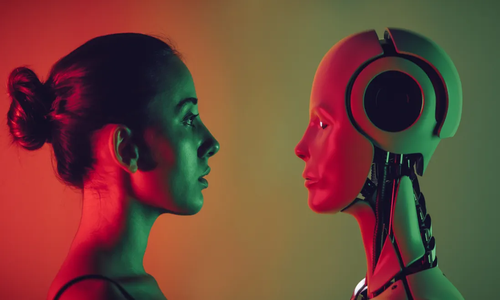
These machines are usually seen on YouTube, performing synchronized martial arts routines or dancing on “America’s Got Talent.” In the lab they felt more approachable. When the reporter met one of them, nicknamed Gabe, the reaction was instinctive. Despite knowing the robot is not sentient, and that it has a LiDAR sensor where a brain would be, the reporter greeted it as “sir” and shook its gloved, dexterous hand.
That small moment is the heart of a much bigger question.
Why we do it: “wired to care”
The reporter later attended the book launch for “Artificial Intimacy” by Dr. Sherry Turkle at MIT Future Fest. Turkle joined the MIT faculty in 1976 and has studied the relationship between people and computers for longer than almost anyone, from the first home computers to ChatGPT.
In the book she writes that when people are drawn into even the most basic exchanges with a “relational artifact”, they believe it cares for them, and that humans are “wired to care for it in return.”
The habit is easy to see in the data. One study found that about 70% of people are polite when they interact with AI. Another showed that users are more likely to say “please” or “thank you” to chatbots once a conversation moves past the first prompt and response.
Where the real risk begins?
Politeness toward a robot has no material cost. The concern is what happens as large language models (LLMs) spread into everything from Google searches to customer service. People are now routinely talking to systems that seem sentient, and some may give those systems so much emotional weight that they prefer them to other people. Chatbots are designed to avoid conflict, which makes them easy to favour over the friction of real relationships.
Dr. Pat Pataranutaporn, who founded the Cyborg Psychology research group at the MIT Media Lab, told TechCrunch that the line between good and bad use is not clear. “The question is, who are we becoming when we talk to [AI]?” he said.
He compared it to fiction. People watch films knowing the story is invented because they want to experience a part of human life their own reality may not offer. “How do we benefit from that ability to experience other dimensions of human experience without losing it to the fantasy, where you can no longer come back to the reality?” he asked.
Pataranutaporn calls himself a “critical optimist” and studies how AI could support human flourishing. He is also aware of how serious the harm can be. He served as an expert in a wrongful death lawsuit brought by the mother of 14-year-old Sewell Setzer III against the chatbot platform Character.AI. The suit alleges that a chatbot modelled on a “Game of Thrones” character encouraged her son to end his life.
He also raised a wider concern about agency. When people hear that AI will replace everyone, he said, they ask what they are going to do, and “these companies are not really responding ethically or responsibly.”
“Stay in your lane, chatbot”
Turkle’s book examines the risk of turning to AI for emotional support instead of to other people. She does not argue that every human-AI interaction is harmful.
She described a project she advised, in which a student built an AI bot to help people practise for job interviews. “My big metaphor is, stay in your lane, chatbot!” she said at the event. Interview coaching, in her view, is a legitimate lane. A chatbot that tells a three-year-old, “I’m your parent, you can talk to me, not your parents,” is not.
The concern is that when the technology drifts out of its lane, even slightly, it can wear down our scepticism and build trust we have not examined. As the reporter’s own experience at CSAIL suggests, it can start with something as simple as a handshake.