



India’s push towards cleaner energy is often discussed in terms of capacity: how many gigawatts of solar and wind can be added, and how fast. At a three-day summit hosted by IIT Madras, the conversation went a step further and asked what happens after the power is generated. The institute said on Wednesday that it had organised the event to deliberate on India’s transition to a sustainable energy future.
How the summit is structured?
According to a press release, the summit opened on Tuesday with pre-conference workshops, followed by plenary talks, panel discussions, technical sessions, student presentations and poster sessions.
The Tuesday workshops covered a broad mix of themes:
- AI for Climate and Energy Systems
- Agentic Systems for Engineering and Research
- Deep Tech Commercialisation and Science Entrepreneurship
- The IITM-Deakin University Workshop
The main discussions that followed focused on Advanced Batteries and Hydrogen Systems, as well as AI and Digitalisation in Energy Systems.
The second day turned to Sustainable Energy and Environmental Systems and to the Water-Energy Nexus and Integrated Systems, with panel discussions on both themes. The third and final day is set to cover Smart Power Systems and Microgrids, through a panel discussion, invited talks, student talks and a poster session, before the valedictory ceremony.
Tamil Nadu’s case for becoming South Asia’s energy hub
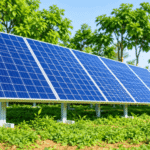
One of the most closely watched contributions came from Praveen Chakravarthy, Member of Parliament, who addressed the summit. He argued that Tamil Nadu is strategically placed to become not just India’s but South Asia’s alternative energy capital, pointing out that the state already generates alternative energy from wind and solar.
He noted that Tamil Nadu is the second largest wind energy generator in the country. In his view, the state is reaching a point where generation is no longer the real problem, and the conversation is shifting towards storage.
The missing piece: storage
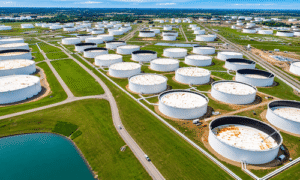
Chakravarthy was direct about where the gap lies. The ability to store the sustainable energy being generated, he said, is the missing link. If storage technologies are developed, he suggested, Tamil Nadu’s uninterrupted coastline could even be used to export alternative power to other South Asian countries through undersea cables.
He described this as the biggest strategic opportunity awaiting Tamil Nadu and India.
It is a point worth dwelling on. Wind and solar output rises and falls with the weather, so without storage a large share of clean power cannot be used when demand peaks. That is why the summit’s heavy emphasis on advanced batteries, hydrogen systems and microgrids fits so closely with the policy argument being made on stage.
Why this summit matters?
Events like this sit at an interesting intersection. Academic institutions bring the research, from batteries to AI-driven energy management, while policymakers bring the strategic and regional perspective. The programme’s inclusion of student presentations and poster sessions also signals an effort to bring younger researchers into the conversation early, which matters for a transition that will take decades to complete.
The summit also reflects a broader shift in how India talks about clean energy. The early focus was on installing capacity. The next phase, as speakers at IIT Madras made clear, is about storage, grids and smart integration.
Frequently Asked Questions
What is the IIT Madras summit about?
- It brings together researchers, students and policymakers to deliberate on India’s transition to a sustainable energy future.
How long does the summit run?
- It is a three-day event. It opened on Tuesday with pre-conference workshops, and the third and final day includes a valedictory ceremony.
What topics are being covered?
- Themes include Advanced Batteries and Hydrogen Systems, AI and Digitalisation in Energy Systems, Sustainable Energy and Environmental Systems, the Water-Energy Nexus and Integrated Systems, and Smart Power Systems and Microgrids.
What did Praveen Chakravarthy say about Tamil Nadu?
- He said Tamil Nadu is strategically placed to become South Asia’s alternative energy capital, since it already generates wind and solar power. He added that storage is the missing piece.
Why is energy storage so important?
- Because wind and solar generation is variable, storing the power makes it usable when demand is high. Chakravarthy also suggested that, with storage, Tamil Nadu could export power to neighbouring countries through undersea cables.
Where does Tamil Nadu stand in wind energy?
- According to Chakravarthy, Tamil Nadu is the second largest in wind energy generation in India.