



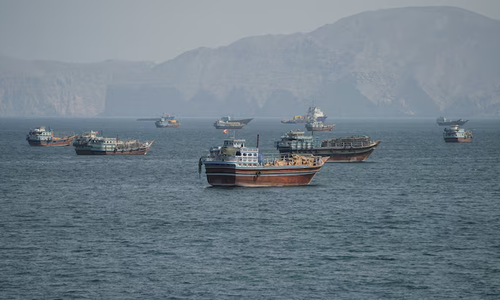
Singapore, October 30: Oil prices climbed on Friday and are on track for a fourth straight monthly gain. A fresh attack on a tanker in the Strait of Hormuz reminded traders that the war on Iran, now in its eighth month, is still a live threat to global supply.
Where prices stand?
Brent crude for December delivery, which expires today, rose $1.20 (1.04%) to $116.08 a barrel by 0323 GMT. The more actively traded January contract gained $1.39 to $112.19. US West Texas Intermediate (WTI) added $1.37 (1.34%) to $103.37.
For the month, Brent is heading for a gain of nearly 11%, while WTI is up roughly 14%.
What happened in Hormuz?
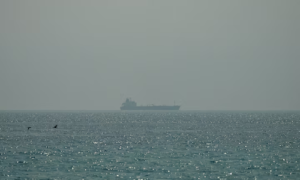
Earlier on Friday, a tanker in the Strait of Hormuz was hit by explosive devices that a small boat had attached to the vessel, according to the UK Maritime Trade Operations (UKMTO). Nobody has yet been identified as responsible.
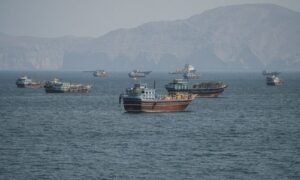
The Strait is the main sea route for crude and fuel leaving the Gulf, so any strike there gets the market’s attention immediately.
Saul Kavonic, head of energy research at MST Marquee, said continued military action around the Strait, combined with little confidence in a workable diplomatic route, is keeping prices high. Traders, he explained, are pricing in the chance of further escalation over the coming weeks.
Saudi infrastructure under fire
The pressure did not begin on Friday. On Thursday, the Houthis claimed attacks on several sites inside Saudi Arabia. They named Ras Tanura, the country’s largest oil refinery, the Rabigh refinery, and a production facility at Abqaiq owned by Saudi Aramco. A Saudi-led coalition said it intercepted a cruise missile that the Houthis had fired toward the kingdom’s western region.
Diplomacy: a door ajar, not open
US President Donald Trump said on Thursday that Vice President JD Vance had reached out to Iran to help with medical supplies. US media had earlier reported that Vance wrote to Tehran’s top security official in an effort to restart peace talks.
Iran has received the letter but has not replied, according to Iranian semi-official media. Those reports added that Tehran wants Washington to meet its conditions first and called any position outside that framework “unacceptable.” That leaves little room for a quick breakthrough.
Oil majors adjust their plans
The security picture is already changing corporate behavior. Two sources familiar with the matter said ExxonMobil and Chevron have cancelled plans to send executives to the UAE’s biggest oil industry show next week. When two of the largest producers pull senior staff from a major Gulf event, it signals how seriously they rate the regional risk.
What analysts expect next?
Ole Hansen, head of commodity strategy at Saxo Bank, told a media briefing in Singapore on Thursday that prices could become even more volatile in the next couple of weeks. He pointed to two political events: Israel’s parliamentary election and the US midterm congressional vote.
Hansen said this uncertainty makes forecasting hard. Still, he expects crude to trade in a higher range of $70 to $90 a barrel, compared with $60 to $70 before the war. He expects this even after the conflict ends, because of the risk of renewed hostilities and the need to rebuild depleted inventories.
Frequently Asked Questions
Why are oil prices rising today?
- A tanker was attacked in the Strait of Hormuz, and Houthi strikes on Saudi oil facilities came a day earlier. Together they have renewed worries about supply disruptions.
How much have Brent and WTI gained this month?
- Brent is up nearly 11% and WTI about 14%, putting both on course for a fourth consecutive monthly gain.
Why is the Strait of Hormuz so important for oil?
- It is the key sea outlet for crude and fuel exported from the Gulf. Any threat to shipping there can quickly tighten global supply and lift prices.
Who attacked the tanker?
- That is not yet clear. The UKMTO reported that explosive devices were attached to the vessel by a small boat, but no responsible party has been identified.
Will oil prices fall if the war ends?
- Not necessarily to pre-war levels. Saxo Bank’s Ole Hansen expects a $70 to $90 range even after the conflict, versus $60 to $70 before it, due to renewed-conflict risk and inventory rebuilding.