


What Makes a Supplier a Superhero? Calm, Capable, Ready
Live events leave very little room for error. There is a fixed start time, an audience waiting, speakers arriving, content changing and dozens of suppliers all working toward the same moment. According to Present Communications, that is exactly why the people behind the equipment matter as much as the equipment itself.
Key Takeaways
- Live events are high-pressure by nature, so the quality of the crew matters enormously
- Equipment is only as good as the people operating it
- Staying calm is a sign of competence, not a sign that nothing difficult is happening
- Preparation, not hope, is what produces calm on site
- The best suppliers remove work from the organiser instead of adding to it
Why Do Live Events Put So Much Pressure on Suppliers?
Pressure is part of what makes the events industry exciting, Present Communications says, but it also means the people an organiser surrounds themselves with make a real difference. The company can supply cameras, microphones, screens, lighting, connectivity and broadcast infrastructure. Even so, it argues that all of that equipment is only as good as the team running it.
For live delivery, the company says it needs people who are technically excellent, who understand their role, who can think clearly and who stay calm.
Is Staying Calm Part of Being Competent?
There is a common assumption that a calm crew means nothing difficult is happening. Present Communications says the opposite is usually true. A good production team can have a lot going on behind the scenes without passing any of that pressure on to the client.
That matters because event organisers already have plenty to manage: delegates arriving, speakers to look after, sponsors, timings, catering, content and, quite possibly, a senior stakeholder asking a question at exactly the wrong moment. They should not also have to worry about whether the microphones work or whether the livestream is healthy.
The company’s approach is simple. If something needs dealing with, the team deals with it. If a decision needs making, the right person makes it. If the event changes, the team adapts. Ideally, the client barely notices.
Does the Team Matter More Than the Equipment?
Present Communications invests in good equipment and keeps looking at new ways of working. Even so, it would choose an excellent technician with familiar, proven kit over an inexperienced one with the newest gear.
The reason is judgement, and judgement comes from experience. Experienced crew know what actually matters and can tell when something needs attention and when it does not. They know how to talk to a nervous presenter five minutes before they walk on stage. They also know when to speak up and when to quietly get on with the job.
At a corporate event, technical skill is only part of the service. The crew represent the company in front of the client, so they need to be professional, approachable and pleasant to work with. As the company puts it, nobody wants brilliant technology delivered by people who make the day harder.
How Does Preparation Build Confidence?
Calm on site does not come from hoping everything goes well. It comes from preparation, which Present Communications breaks down into a clear set of steps:
- Understanding the brief properly
- Knowing the venue
- Planning the system
- Testing the equipment
- Briefing the team
- Making sure everyone understands what they are responsible for
- Thinking about the audience in the room, the people joining remotely and what the client is trying to achieve
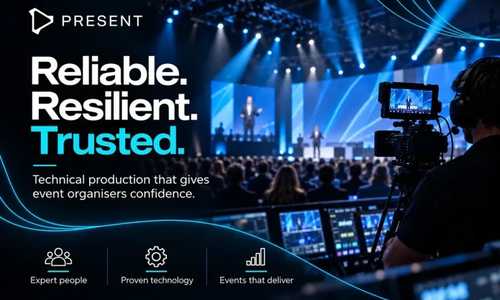
The company describes its approach as reliable, resilient and trusted, and sees the three as closely connected. Reliable means the system does what it is supposed to do. Resilient means it has been designed properly for the importance of the event. Trusted means the client knows they do not need to spend the day checking either. That trust, it says, is earned over time.
How Do Good Suppliers Make the Organiser’s Job Easier?
The best supplier relationships tend to be simple. The organiser explains what they want to achieve, and the supplier takes ownership of its part. There are still conversations, questions and decisions along the way, and collaboration remains important. But the aim is to take work off the organiser, not add to it.
This matters more as events get more technically complex. A fairly traditional conference can now include an in-room audience, remote presenters, livestreaming, live captions, simultaneous interpretation, recorded content, social media outputs and resilient internet connectivity. An organiser should not have to become an expert in all of that, and that is the role of the supplier.
What Does “Getting the Job Done” Really Look Like?
The “Superhero Suppliers” theme makes the company smile a little, because the best production teams rarely look heroic. There should be nobody running around backstage dramatically saving the event every five minutes. Good production usually looks remarkably uneventful.
People know what they are doing. The technology works. The team communicates. The client feels looked after, the speakers feel comfortable, and the audience can focus on the content instead of the production behind it.
A huge amount of expertise, preparation and decision-making may sit behind that experience, but the end result should feel simple. For Present Communications, that is what getting the job done means: no drama, no showing off the technology, just a highly capable team delivering excellent work, staying calm under pressure and giving the organiser the confidence to concentrate on their event. It is the standard the company says it tries to meet every time.
Frequently Asked Questions
Why does the crew matter more than the equipment at a live event?
- Experienced crew bring judgement. They know what matters, when something needs attention and how to support nervous presenters, which equipment alone cannot do.
What does “reliable, resilient and trusted” mean?
- Reliable means the system does what it should. Resilient means it is designed properly for the importance of the event. Trusted means the client does not need to check either one.
How do good suppliers reduce stress for event organisers?
- They take ownership of their part of the event, handle issues quietly and adapt when plans change, so the organiser can focus on delegates, speakers, sponsors and content.
What makes modern events more technically complex?
- Even a traditional conference can include livestreaming, live captions, simultaneous interpretation, remote presenters, recorded content, social media outputs and resilient internet connectivity.