



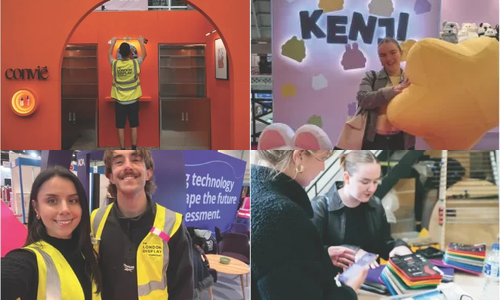
The UK-based exhibition specialist, active since 1990, says its approach starts with understanding a client’s goals before any drawing begins, and ends with a finished space ready to welcome visitors.
Behind every busy trade-show stand sits a long chain of planning, design, production and installation that visitors rarely see. The London Display Company, which says it has been designing and building physical brand spaces since 1990, describes itself as a team that takes an idea “from that first conversation right through to the moment the doors open.”
The details below come from the company’s own account of its work, so they should be read as its description of its approach rather than an independent assessment.
Who the company works with?
According to the company, its client list includes Uber and Cancer Research. It says it delivers exhibition stands, event environments and bespoke installations across the UK, Europe and the USA, with experience spanning hundreds of major exhibitions in leading event venues. It also says it has produced bespoke installations and products for luxury brands within well-known UK retail spaces.
The team, as described, mixes creative designers, project managers and skilled carpenters and craftspeople.
Built to be reused
One point the company stresses is repeat business. Many clients return year after year, it says. For some of them it stores, adapts and reuses parts of their exhibition spaces across several events. The company argues this reduces waste, gives better long-term value, and lets a brand’s presence evolve rather than start from scratch each time.
A “why, who, how” approach to design
The company says its first step is not drawing but asking questions, in three stages:
- Why: Why is the client exhibiting, why is this event important, and why now?
- Who: Who is the business, who are its customers, and who will walk onto the space? Who does the client want visitors to believe they are?
- How: How will success be measured, how should the space represent the brand, and how should someone feel and act after walking in?
Only after that, the company says, does it look at the practical side: how the space must function, what is possible within the timeline and budget, and where the biggest impact can be made.
From design to handover
According to the company, the process then moves through three phases:
- Design: Its design team combines the brief and turns it into drawings that match the client’s goals and brand.
- Project management: Project managers plan production, logistics and venue requirements, and handle late changes. The company says it works closely with clients throughout and describes communication as central to its approach.
- Build day: Carpenters, joiners, installers and specialist partners assemble the space, including artwork and technical features. After final checks, the project manager reviews the finished build with the client before sign-off and handover.
Client spotlight: Uber Eats
The company highlights Uber Eats as a case study. As an existing client, Uber Eats asked it to rethink its exhibition presence. The brief, the company says, was to move away from a more understated look toward spaces that felt bold, eye-catching, dynamic and clearly Uber Eats.
The company says it drew on the brand’s playful guidelines, combining confident colour, neon lighting, gamification and a youthful energy. It adds that the concept was built to work beyond a single event: a flexible design language that can scale across 15 different stand sizes, shows and campaign themes while keeping a recognisable identity.
The company has published a longer case study on its own channels for readers who want more detail.
Why this matters for brands that exhibit?
Exhibitions are costly, and brands increasingly want stands that can be adapted and reused instead of rebuilt each time. The reuse model and the modular design approach the company describes both respond to that. As with any supplier’s own account, buyers would usually want to check references and past work before choosing a partner.
Frequently asked questions
What does The London Display Company do?
- It designs and builds exhibition stands, event environments and bespoke installations, from the first conversation through to the build and handover.
Since when has it operated?
- The company says it started out in 1990.
Where does it work?
- The company says it delivers projects across the UK, Europe and the USA.
Which brands has it worked with?
- The company names Uber and Cancer Research among its clients, and highlights Uber Eats in a case study.
What is the company’s design process?
- It says it begins by asking why, who and how, then moves to practical planning, design, project management and the on-site build.
Does it reuse exhibition materials?
- For some clients, the company says it stores, adapts and reuses elements of their spaces across multiple events.