



The Interior Department has asked a Maryland court to send the project’s construction approval back for review, reviving a long-running effort by the Trump administration to reopen a permit granted under President Biden.
The Trump administration has made a fresh attempt to reopen the approval of US Wind’s Maryland Offshore Wind project, a development of up to 2.2GW off the coast of Ocean City. The Interior Department has asked a federal court to let it reconsider the project’s Construction and Operations Plan, the central document behind the permit.
The move is the latest chapter in a fight that has stretched over more than a year, and it lands on one of the few fully permitted offshore wind projects in the country that has not yet started construction.
What the Interior Department Filed?
The request came in a motion for remand filed in US District Court in Maryland. The filing was submitted on 13 October 2026, and federal lawyers argued that the approval should be reviewed again under the Outer Continental Shelf Lands Act.
A motion for remand asks a court to send a decision back to the agency that made it, so the agency can take another look. It is not a final ruling on the project. It is a request for permission to rethink an earlier decision.
In its filing, Interior argued that the approval granted under the Biden administration allowed too great an impact on local wildlife in the waters off the Maryland coast. Its lawyers also said the earlier decision did “not adequately explain” how the project’s “potential moderate-to-major adverse impacts” on other uses of the outer continental shelf fit with what the law requires.
The Concerns the Government Cited
The filing names several specific issues. The government pointed to potential effects on the North Atlantic right whale, scenic and visual resources, commercial fisheries and scientific research as matters needing further consideration under the legislation. It also addressed claims connected to the National Marine Fisheries Service.
None of these concerns is entirely new. When the administration first moved against the permit last year, federal officials argued that regulators had underestimated possible impacts on helicopter search-and-rescue missions and on commercial fishing. The latest filing builds on that earlier line of argument rather than starting from scratch.
Remand Without Vacatur: Why the Wording Matters
One detail in this filing is easy to miss but important. The government is seeking a remand without vacatur, which would let Interior reconsider the approval without cancelling it in the meantime.
In plain terms, the permit would stay on the books while the review happens. That is different from the position the government took in September 2025, when the Interior Department asked the same court to remand and/or vacate its approval, saying the case would then be moot if the court granted its request for voluntary remand with vacatur. Vacatur would have wiped the approval out. A remand without it does not.
Even so, the practical effect is uncertain. An approval that is formally in place but under active reconsideration is a hard thing to build on, and lenders and suppliers tend to be cautious in that position. As the source describes it, the permit has been left sitting in limbo while the underlying case continues.
A Long-Running Effort
The October filing renews a longstanding attempt by the Trump administration to review the project’s construction permit. The timeline shows how long this has been going on:
- December 2024: The Bureau of Ocean Energy Management approved the construction and operations plan for the project developed by US Wind off Ocean City.
- Summer 2025: In a court filing, Interior said it intended to reevaluate its decision to approve the plan under the Outer Continental Shelf Lands Act and would move for remand no later than 12 September.
- 12 September 2025: Interior filed its motion in the US District Court in Maryland.
- December 2025: An effort by US Wind to block the permit review failed in court, leaving the permit in limbo while the case proceeds.
- 13 October 2026: The government files a fresh remand request, this time without vacatur.
The underlying case was brought by opponents of the project. The plan has also been challenged in a complaint filed in the same federal court by the leadership of Ocean City. The government’s remand requests have been made within those ongoing proceedings.
What Is at Stake for the Project?
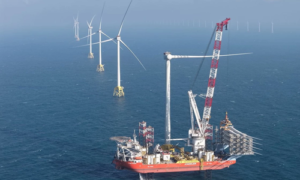
The Maryland Offshore Wind Project is a sizeable undertaking. It could comprise up to 114 wind turbines, with a total capacity of 2.2GW. The plan also includes four offshore substations, a meteorological tower and subsea cables making landfall in Sussex County, Delaware.
Two phases of the project, known as MarWin and Momentum Wind, already hold offshore renewable energy certificates from the State of Maryland. That gives the project a state-level policy footing, even as its federal permit remains under challenge.
The project also matters beyond the turbines themselves. It underpins US Wind’s Sparrows Point steel facility in Baltimore, which the company envisions as a national hub for monopile manufacturing and offshore logistics. Any extended delay would therefore ripple through jobs, supply chains and planning well beyond the wind farm site. environmentenergyleader
There is also a timing question. US Wind had not yet reached a final investment decision or started construction when the government first moved against the permit. A project at that stage is especially sensitive to regulatory uncertainty, because financing usually depends on a permit that is firmly in place.
What US Wind Has Said?
US Wind has consistently defended its approvals. When the administration first signalled its intentions, a company vice president said the permits were secured after a multi-year, rigorous public review process and that the company remained confident they were legally sound. The company has also argued that the government’s move is part of a wider effort to slow down offshore wind and renewable energy projects.
The source material for this latest filing does not include a fresh response from the company, so its current position on the October request is not confirmed here.
What Happens Next?
The next step belongs to the court. Judges in remand disputes generally have a few options: grant the request, grant it with conditions, or decline and move the case toward a full review of the merits. Which path the court takes will shape the project’s timetable.
Neither the filing as reported nor the court record available at the time of writing says when a decision might come. Until then, the project sits in a familiar but uncomfortable position: approved on paper, reconsidered in practice, and watched closely by developers, regulators and coastal communities alike.