




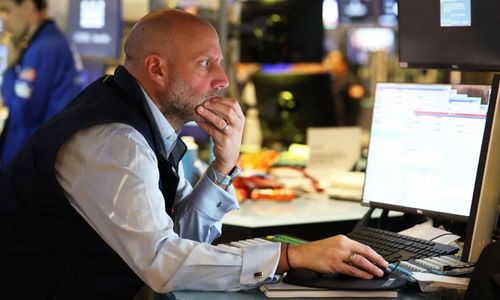
Shares in artificial intelligence and technology companies recovered some ground on Friday, a day after a heavy sell-off erased trillions of dollars from stock values. The recovery was partial, though, and it was uneven across the world’s markets.
How Wall Street Ended the Day?
The tech-heavy Nasdaq Composite closed in positive territory. It finished Friday up 1.1%, which only partly reverses the 5.5% fall it suffered on Thursday.
The other main US indexes told a more mixed story:
- S&P 500: closed up 0.3%
- Dow Jones Industrial Average: flat through the day, ending down 0.4%
- Nasdaq Composite: up 1.1% after Thursday’s 5.5% drop
Companies that had lost hundreds of billions in market value on Thursday won back some ground, including Nvidia and Tesla. Chip and semiconductor makers had taken the worst of the hammering the day before.
Asia and Europe Did Not Share the Relief
The rout began in the US on Thursday and then spilled into Asian and European trading on Friday. Those markets had a tougher day than Wall Street.
South Korea’s Kospi closed down 6%, with chipmaker SK Hynix falling more than 10%. In Europe, the main indexes in Germany, France and Spain all ended lower. In London, the FTSE 100 slipped 1.01%.
UK traders also had the Bank of England to digest. The central bank raised interest rates and signalled that another increase could follow to curb rising prices.
Why Investors Sold?
Investors were selling tech shares partly because of concern that the Democratic victory in the midterm elections would mean slower AI development.
The worry has a basis. A number of Democrats campaigned for new rules on artificial intelligence and data centres. The party has since won control of both houses of Congress, along with key contests in states that have been part of the AI data centre race.
President Donald Trump responded on Friday by restating his support for what he calls “super intelligence.” He said only “foolish leadership” would turn away from the riches it could bring.
There is a second concern running alongside the political one: whether the enormous sums being spent on AI will pay off.
A Jobs Report That Muddied the Picture
Economic data added to Friday’s mixed mood. The latest US employment figures showed an unexpectedly strong 165,000 jobs added to the economy in September. Strong hiring can be good news for the economy, but it also complicates the outlook for interest rates, which matters a great deal for richly valued tech stocks.
What the Experts Are Saying?
Market and industry voices read the moves differently, which is useful context:
Russ Shaw, founder of Tech London Advocates, said the election result is a message that a rethink is needed on AI. He expects the incoming Congress to focus on AI “in a very dramatic way.” He supports the technology, he said, but thinks AI companies have not communicated its benefits well, particularly in the US.
Pierre Baqué, chief executive of AI platform Neural Concept, called the share moves a “necessary market correction.” In his view, the industry must move beyond unchecked infrastructure investment and show greater financial discipline. He described the moment as a “market purgatory” in which raw technology has to prove its wider economic value.
Dan Coatsworth, head of markets at AJ Bell, called it a brutal week for markets. The key question, he said, is whether the jump in the S&P 500 and Nasdaq can be sustained.
What to Watch Next?
After years of covering markets, I would treat one good day with caution. A rebound after a 5.5% fall on the Nasdaq is normal. What matters is whether buyers stay in the market next week, and whether the debate in Washington about AI rules turns into specific proposals. Until then, expect prices to keep swinging on every headline.
Frequently Asked Questions
Did AI stocks recover on Friday?
- Partly. The Nasdaq Composite rose 1.1% after falling 5.5% on Thursday, so it recovered only a portion of the loss.
Why did AI and tech stocks fall so sharply?
- Investors were concerned that the Democratic midterm victory could mean slower AI development, and there are also worries about whether huge AI spending will pay off.
How did other markets react?
- Asia and Europe fared worse than the US. South Korea’s Kospi fell 6%, SK Hynix dropped more than 10%, and the FTSE 100 declined 1.01%.
How did the S&P 500 and Dow Jones close?
- The S&P 500 ended up 0.3%, while the Dow Jones Industrial Average ended down 0.4%.
What did the jobs report show?
- The US economy added an unexpectedly strong 165,000 jobs in September.
What did President Trump say about AI?
- He reiterated his support for what he calls “super intelligence” and said only “foolish leadership” would say no to the riches it brings.