



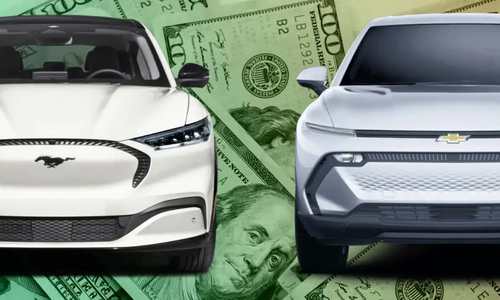
Some Democratic leaders want to bring back the $7,500 federal electric vehicle tax credit if their party regains control of Congress after the upcoming midterm elections. Supporters say the incentive would likely lift EV sales and help the United States keep pace in the global EV race. But the idea faces a long list of political obstacles.
The bill behind the push
More than 160 House Democrats are backing proposed legislation from California Rep. Mike Levin and Illinois Rep. Sean Casten, Politico reported on Monday. The measure, called the Cheap Energy Act, aims to restore Biden-era clean energy tax credits that were repealed last year, including the EV incentive created under the Inflation Reduction Act.
The bill goes beyond tax credits. It also seeks to modernize the electricity grid without making ordinary customers pay for the upgrades that AI data centers require.
The credits were ended through the tax and spending law that President Donald Trump signed in 2025, which repealed longstanding clean energy credits.
Why the politics have shifted?
Politico reported that the EV credit may now be a liability for some Democrats, after years of Republican attacks on electric vehicles. That is a notable change in how the party weighs the issue.
Trump has repeatedly criticized EVs. In one remark reported by the Associated Press, he said they don’t go far and cost a fortune. His tone softened after Tesla CEO Elon Musk put hundreds of millions of dollars into his 2024 presidential campaign, but he has continued to attack broader clean energy policies.
Even a Democratic win in Congress would not settle things on its own. A bill like this would still need the president’s signature, and Trump has been openly critical of both EVs and clean energy policy.
What opponents argue?
Critics of the credit have made their case for years, and any revival would meet the same arguments. Republicans targeted the credit as a way to help pay for the 2025 tax package. One analysis by Capital Alpha Partners put the credit’s 10-year cost at more than $200 billion, far above the Congressional Budget Office’s initial estimate of $12.5 billion in 2022. Earlier, Sen. John Barrasso argued that the credit benefits the wealthiest Americans and costs taxpayers billions. A policy brief from the Institute for Energy Research also estimated that repealing the credits could add roughly $300 billion in federal revenue between 2026 and 2035.
Supporters dispute that framing and say the credit helps lower costs and speeds up adoption. Both sides, in other words, are arguing about cost, but reaching opposite conclusions about value.
The market has not stood still
Meanwhile, the policy shift has coincided with a resurgence of gas-powered cars in the US, even as Europe, China and much of the developing world move quickly toward EVs.
EV proponents point to steady technical progress. Automakers keep stretching range, with many new EVs able to cover more than 400 miles on a single charge. The US also passed 80,000 public fast-charging ports in the third quarter, a new milestone. Advocates argue that EVs now offer clear advantages in software, efficiency and operating costs.
They also say the technology still needs supportive policy to keep growing. Without it, they warn, the US EV market could stay tied to political cycles while other countries move ahead.
What to watch next?
Three things will shape whether the credit has a path back. The first is the outcome of the midterm elections and which party controls Congress. The second is whether Democrats treat the EV credit as an asset or a liability in their messaging. The third is whether any revival bill can win enough support, and a presidential signature, to become law.
Frequently Asked Questions
Is the federal EV tax credit available now?
- No. The credit was repealed in 2025 through the Trump-backed tax and spending law, according to the legislation’s supporters and press reports.
What is the Cheap Energy Act?
- It is a proposed bill from Reps. Mike Levin and Sean Casten that would restore Inflation Reduction Act tax credits, including EV incentives, and modernize the grid without shifting upgrade costs for AI data centers onto ordinary customers.
How many lawmakers support it?
- More than 160 House Democrats are backing the proposal, according to Politico.
Why might the EV credit be a political risk for Democrats?
- Politico reported that years of Republican attacks on EVs may have turned the credit into a liability for some Democrats.
What do opponents say about the credit?
- Critics argue it is costly for taxpayers and benefits wealthier buyers. Supporters say it lowers costs and speeds up EV adoption.