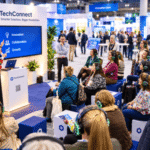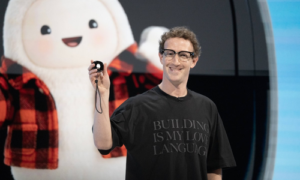




Science Corporation says it has placed its PRIMA retinal implant in a patient with Stargardt disease for the first time, extending a device that is already sold in Europe for a different eye condition. The announcement came from CEO Max Hodak, who spoke at TechCrunch Disrupt.
What the Company Announced?
According to Science Corporation, the patient received the implant in May as part of an ongoing trial at the Sydney Eye Hospital in Australia. The company reports that in his first rehabilitation session the patient could see a letter, and by the second session he was able to read a word. These are early results from a single patient, reported by the company itself, and have not been independently verified.
Stargardt disease is an inherited eye condition with no cure at present. It damages the outer retina, where the light-sensing cells sit, and slowly kills them. The inner retina, which carries visual signals on to the brain, may stay intact. The result is a blind spot in central vision that grows over time. Roughly 150,000 people worldwide have lost vision because of it.
How PRIMA Works?
The implant is a chip about two millimetres by two millimetres, placed at the back of the eye in the area where the photoreceptors have degenerated. The surgery takes about an hour. After that, the patient wears glasses with a built-in camera, which send what it sees to the chip. In practice, the chip stands in for the lost photoreceptors.
Hodak was open about the limits. He compared the experience to looking through a straw. The patient does not get wide, colourful vision, only a small patch of central sight in black and white, which is sharp and high in contrast. That is enough to make out a couple of letters at a time.
What Comes Next?
Making the field of view larger is the main goal. A bigger implant has to follow the curve of the eye, and the electrodes have to become smaller to get closer to natural levels of detail. Hodak said a next-generation version is being developed and should reach human patients within the next year. He also said he expects the technology to come close to natural sharpness of vision within five years. That is a forecast from a company founder, so it is best read as a goal rather than a promise.
PRIMA is already available commercially in Europe for geographic atrophy, an advanced form of age-related macular degeneration. Science Corporation believes the same approach can work across several retinal diseases, and the Stargardt trial is a first test of that idea.
Why Retinal Implants Count as Brain-Computer Interfaces?
Hodak co-founded Neuralink and served as its president before leaving to start Science Corporation in 2021. On stage he argued that the retina is part of the central nervous system, so devices such as retinal prostheses and cochlear implants belong in the same family as brain-computer interfaces (BCIs). In his words, vision reaches the brain as electrical activity along the optic nerve. If that signal can be reproduced correctly, the brain can be given a form of sight.
The company says its sight-restoration work is also a practical way to prove its methods and build a sustainable business before moving further into neural technology.
The Wider BCI Plans
Science Corporation has said its brain sensor would sit inside the skull on top of the brain. A Neuralink device, by contrast, goes directly into brain tissue. Hodak said the first clinical use, not yet announced, will target a well-known neurodegenerative disease. The company is also looking at stroke, where connections into two areas of the deep brain could in theory create entirely new cortical areas, something he said conventional electrodes cannot do.
He described the long-term mission as understanding how the brain creates the mind and learning to build engineered brains. He also said the company is not designing for healthy 40-year-olds, but expects that many people will use some form of BCI by their 60s or 70s, with the aim of extending healthspan as well as lifespan.
Why It Matters?
For people with Stargardt disease, who currently have no treatment, any sign of restored central vision is significant. But one patient and a couple of weeks of rehabilitation are only a starting point. Larger trials, longer follow-up and independent results will show how much real benefit the implant can give.